Marching Metaphors
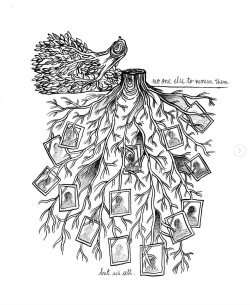
Metaphor is a powerful tool. As a child therapist, it can communicate meaning on multiple levels, often with a deeper sense, beyond a child’s cognitive capacity. A child drawing a picture of a small boat in a stormy sea, and tells me there’s a tiny bunny inside the boat, communicates what she is unable to convey in the literal sense. In that moment I can empathise with how the bunny may be feeling, invite her to speak from the point of view of the bunny, or even to give a voice to the stormy sea itself. She may give the drawing a title. Lost at sea. We may link some of the emotions named to the child’s life experiences, maybe she’s feeling scared/ confused/ overwhelmed. I may, in future sessions, refer back to this image or the title, as it now conveys layers of meaning. It now encapsulates a part of this child’s experience, a moment in her history, contained within her chosen words or picture. This may be a passing moment, or it may become a theme, where we return to this feeling of feeling ‘lost at sea’, which may become symbolised with a look or gesture, enough for us to get what the meaning is. The meaning itself may evolve with time, as the person grows and their life experiences expand, and deepen.
L’Shana Haba’ah B’Yerushalayim
As part of Passover and Yom Kippur, Jewish people recite the phrase: ‘next year in Jerusalem.’ This may once have been a wish expressed to have a land to call home, a wish for that home to be in the Holy Land. I can imagine these words evoking deep comfort when a family is gathered together in uncertain or dangerous times. A comforting wish to help a person or a family bear the pain of today by envisioning a better tomorrow. It was not a call to arms, namely, to rise and invade Jerusalem. It was recently pointed out to me that, for Christian Zionists, the prayer may reflect a literal wish to annihilate all and overtake Jerusalem! As far as I understand, in Judaism, the prayer is a metaphor, a reminder of the many centuries of living in exile. Even today, when the practice is taking place by those living in Jerusalem itself, the same phrase is uttered, because it has come to surpass the original meaning, the wish. Perhaps it’s shifted from aspiring towards something on the outside to an internalised sense of home and belonging, beyond a physical land.
From the River to the Sea
There has been repeated allegations around this chant, heard at the peace/ ceasefire protests across the globe. It’s been repeatedly (mis)labelled in the media as antisemitic. Many Jewish people have expressed feeling intimidated, associating the chant with Hamas and a call for the downfall of the Israeli state. Writer and scholar, Yusuf Munnayer, traces back the origins of the chant, which significantly predates Hamas, and positions it within its historical context. It was originally a cry against the fragmentation of the Palestinians, who originally welcomed the Jewish influx from across Europe and Russia, the Middle East and Africa, only to realise that the (British) plan involved splitting the land, and expelling them from their homes, to accommodate the new population. From the start, three quarters of a century ago, the Palestinians foresaw the two-state solution to be a false promise. They suspected that over time, the land promised to them will slowly be eaten into by the hungry, expanding Zionist state. Unfortunately, this suspicion was well-founded.
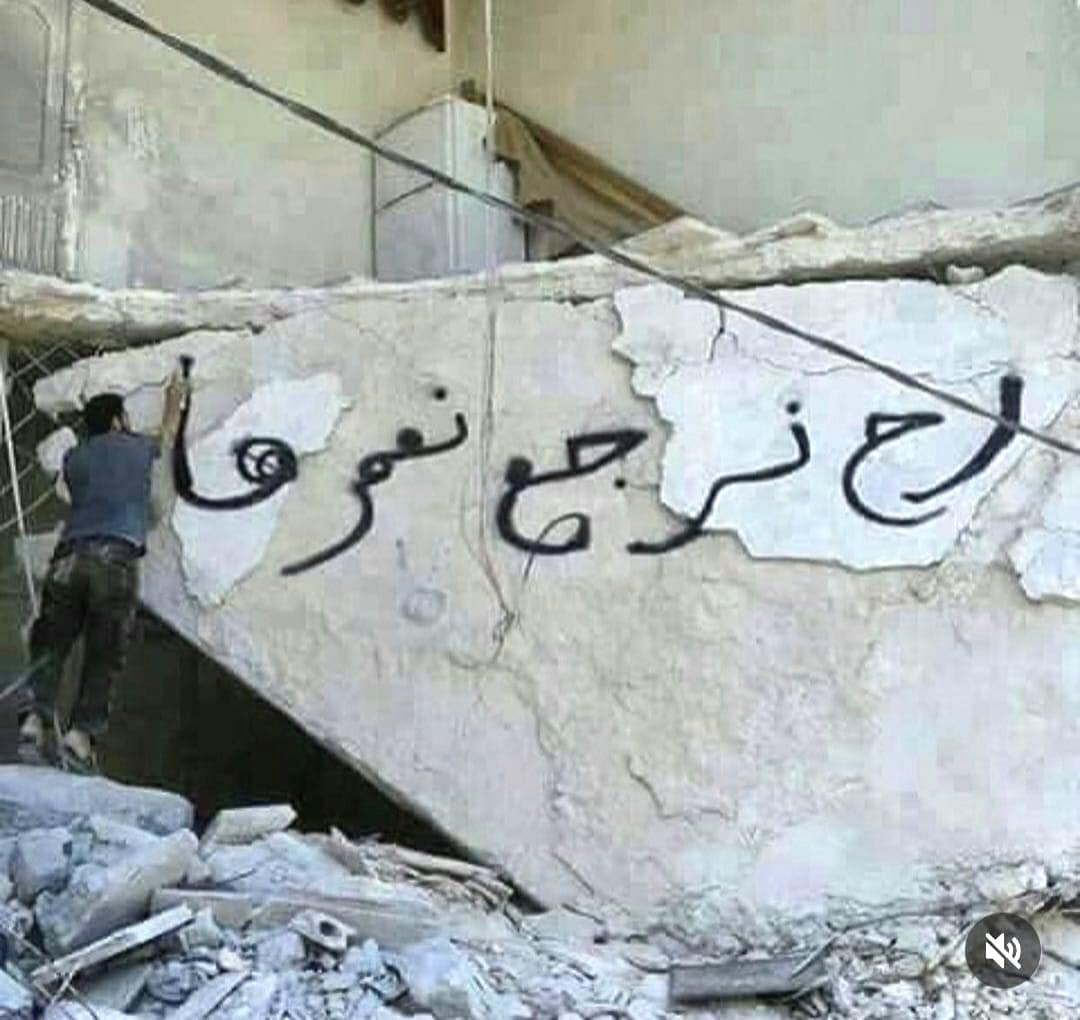
So when people chant ‘From the River to the Sea, Palestine will be free’ the call is for the liberation of the Palestinian people, a reminder of the forced fragmentation, not only of land, but of people. The power of metaphor, I believe, holds true here, as it does in the Jewish prayer:
Whilst the Hebrew phrase acts as a reminder of the experience of exile, the Palestinian chant stands as a promise of reintegration; one day we will all return to be together in our home. This is not a message of hate, but a call to connect, to rise up and come together. It is a message of hope.
Munayyar lists the myriad of ways Paletininans have been divided by Israeli policy:
“There are Palestinian refugees denied repatriation because of discriminatory Israeli laws. There are Palestinians denied equal rights living within Israel’s internationally recognized territory as second-class citizens. There are Palestinians living with no citizenship rights under Israeli military occupation in the West Bank. There are Palestinians in legal limbo in occupied Jerusalem and facing expulsion. There are Palestinians in Gaza living under an Israeli siege. All of them suffer from a range of policies in a singular system of discrimination and apartheid—a system that can only be challenged by their unified opposition. All of them have a right to live freely in the land from the river to the sea.”
Maha Nassar, a scholar of Modern Middle Eastern and Islamic Studies, reminds us that the Palestinians see their homeland as indivisible– from the river to the sea- and invokes the biblical parable of Solomon and the baby to explain their position: “Like the real mother in the parable, who begged Solomon to refrain from splitting her baby in half, Palestinian Arabs couldn’t stand to see their beloved country split in two.“
Munnayy believes that when the Zionist argument struggles to dissuade the public from their call for freedom, justice, and equality of all people throughout the land, they instead shoot down the messenge and the messanger. This saw the censureship and dismissal of US congress woman, Rashida Tlaib, who supports the establishment of a single, binational Palestinian-Jewish state in place of what is now Israel, the West Bank and Gaza. Tlaib made an articulate and moving speech to congress, though what is missing, in this incredibly volatile and divisive world we are in, is nuance and the symbolic. In fact, the part of our brain that is able to think metaphorically, creatively linking experience with imagery, goes offline when we are in survival mode, as the brain is too busy going into fight or flight mode. A child who has suffered severe trauma would need time to recover, heal, to trust (in me, and the relationship and in herself too), in order to start addressing the trauma. Without this processing, a person’s whole system can snap (or get triggered) into high alert with both real and imagined fears, for example, a loud noise or the therapist wearing something unexpected (amazing how much wearing/ not wearing glasses can have an impact!) or changes in the therapy, which can emotionally dysregulate the child so that the entire session is simply helping them regulate, to ground again.
The March: A Cry of Grief
Seen through this lens: I can understand the fear a chant might instil in a person who is already cautious or fearful of a group of people, possibly with experience of persecution for many centuries, and across across the globe. To stop a march or a chant, and continue to censure and dismiss people who voice their concern, sadness and anger, is to feed the fear rather than address it. Of course, there will be people marching who see the protest as a window to vent their hatred and racism, and who may parrot this chant with a very different intention. This is the reality of any large gathering, and the challenge (for both the police and fellow protestors) to call out this minority (and I do not question that it is a minority, whether 5 or 10%).
Some have objected to the Protest falling on Remembrance (or Armistice) Weekend, which commemorates the service men and women injured and killed in the line of duty. Armistice Day marks the beginning of the end of the First World War, when an agreement was struck to end the fighting. Armistice is Latin for Stand (still) Arms. The protest is calling for just that: to cease fire- to stand still arms- to stop the missiles and phosphorus bombs raining on civilians. Not brave men and women who chose to put their lives on the line for their country, but ordinary folk, the majority of which are children.
Save the Children: ‘more children have been killed in Gaza in the last few weeks than the total killed in conflicts around the world in every year since 2019.’ Unicef: ‘Gaza is now a graveyard for thousands of children.’ It strikes me as ironic that some are calling to cancel the protest when the intention is to remember those lives were lost to war. It does not appear to me that we have remembered, as we seem to be (as a nation) complicitly silent, witnessing atrocities in action.
Perhaps remembering need not be confined to a moment of silence, but a collective cry of grief. A lament for the grave forgetfulness of humankind.
This is not about sides. Or at least, I’m on the side of all children, babies, teenagers, mothers, grandmothers, grandfathers, killed. Whether by hyped-up young service men and women pressing buttons, or butchered by enraged fighters unleashed from their cage. All of them. To resist the fragmentation and splitting, to come together for the sake of humanity.
 starakin