Metaphor is a powerful tool. As a child therapist, it can communicate meaning on multiple levels, often with a deeper sense, beyond a child’s cognitive capacity. A child drawing a picture of a small boat in a stormy sea, and tells me there’s a tiny bunny inside the boat, communicates what she is unable to convey in the literal sense. In that moment I can empathise with how the bunny may be feeling, invite her to speak from the point of view of the bunny, or even to give a voice to the stormy sea itself. She may give the drawing a title. Lost at sea. We may link some of the emotions named to the child’s life experiences, maybe she’s feeling scared/ confused/ overwhelmed. I may, in future sessions, refer back to this image or the title, as it now conveys layers of meaning. It now encapsulates a part of this child’s experience, a moment in her history, contained within her chosen words or picture. This may be a passing moment, or it may become a theme, where we return to this feeling of feeling ‘lost at sea’, which may become symbolised with a look or gesture, enough for us to get what the meaning is. The meaning itself may evolve with time, as the person grows and their life experiences expand, and deepen.
L’Shana Haba’ah B’Yerushalayim
As part of Passover and Yom Kippur, Jewish people recite the phrase: ‘next year in Jerusalem.’ This may once have been a wish expressed to have a land to call home, a wish for that home to be in the Holy Land. I can imagine these words evoking deep comfort when a family is gathered together in uncertain or dangerous times. A comforting wish to help a person or a family bear the pain of today by envisioning a better tomorrow. It was not a call to arms, namely, to rise and invade Jerusalem. It was recently pointed out to me that, for Christian Zionists, the prayer may reflect a literal wish to annihilate all and overtake Jerusalem! As far as I understand, in Judaism, the prayer is a metaphor, a reminder of the many centuries of living in exile. Even today, when the practice is taking place by those living in Jerusalem itself, the same phrase is uttered, because it has come to surpass the original meaning, the wish. Perhaps it’s shifted from aspiring towards something on the outside to an internalised sense of home and belonging, beyond a physical land.
From the River to the Sea
There has been repeated allegations around this chant, heard at the peace/ ceasefire protests across the globe. It’s been repeatedly (mis)labelled in the media as antisemitic. Many Jewish people have expressed feeling intimidated, associating the chant with Hamas and a call for the downfall of the Israeli state. Writer and scholar, Yusuf Munnayer, traces back the origins of the chant, which significantly predates Hamas, and positions it within its historical context. It was originally a cry against the fragmentation of the Palestinians, who originally welcomed the Jewish influx from across Europe and Russia, the Middle East and Africa, only to realise that the (British) plan involved splitting the land, and expelling them from their homes, to accommodate the new population. From the start, three quarters of a century ago, the Palestinians foresaw the two-state solution to be a false promise. They suspected that over time, the land promised to them will slowly be eaten into by the hungry, expanding Zionist state. Unfortunately, this suspicion was well-founded.
So when people chant ‘From the River to the Sea, Palestine will be free’ the call is for the liberation of the Palestinian people, a reminder of the forced fragmentation, not only of land, but of people. The power of metaphor, I believe, holds true here, as it does in the Jewish prayer:
Whilst the Hebrew phrase acts as a reminder of the experience of exile, the Palestinian chant stands as a promise of reintegration; one day we will all return to be together in our home. This is not a message of hate, but a call to connect, to rise up and come together. It is a message of hope.
Munayyar lists the myriad of ways Paletininans have been divided by Israeli policy:
“There are Palestinian refugees denied repatriation because of discriminatory Israeli laws. There are Palestinians denied equal rights living within Israel’s internationally recognized territory as second-class citizens. There are Palestinians living with no citizenship rights under Israeli military occupation in the West Bank. There are Palestinians in legal limbo in occupied Jerusalem and facing expulsion. There are Palestinians in Gaza living under an Israeli siege. All of them suffer from a range of policies in a singular system of discrimination and apartheid—a system that can only be challenged by their unified opposition. All of them have a right to live freely in the land from the river to the sea.”
Maha Nassar, a scholar of Modern Middle Eastern and Islamic Studies, reminds us that the Palestinians see their homeland as indivisible– from the river to the sea- and invokes the biblical parable of Solomon and the baby to explain their position: “Like the real mother in the parable, who begged Solomon to refrain from splitting her baby in half, Palestinian Arabs couldn’t stand to see their beloved country split in two.“
Munnayy believes that when the Zionist argument struggles to dissuade the public from their call for freedom, justice, and equality of all people throughout the land, they instead shoot down the messenge and the messanger. This saw the censureship and dismissal of US congress woman, Rashida Tlaib, who supports the establishment of a single, binational Palestinian-Jewish state in place of what is now Israel, the West Bank and Gaza. Tlaib made an articulate and moving speech to congress, though what is missing, in this incredibly volatile and divisive world we are in, is nuance and the symbolic. In fact, the part of our brain that is able to think metaphorically, creatively linking experience with imagery, goes offline when we are in survival mode, as the brain is too busy going into fight or flight mode. A child who has suffered severe trauma would need time to recover, heal, to trust (in me, and the relationship and in herself too), in order to start addressing the trauma. Without this processing, a person’s whole system can snap (or get triggered) into high alert with both real and imagined fears, for example, a loud noise or the therapist wearing something unexpected (amazing how much wearing/ not wearing glasses can have an impact!) or changes in the therapy, which can emotionally dysregulate the child so that the entire session is simply helping them regulate, to ground again.
The March: A Cry of Grief
Seen through this lens: I can understand the fear a chant might instil in a person who is already cautious or fearful of a group of people, possibly with experience of persecution for many centuries, and across across the globe. To stop a march or a chant, and continue to censure and dismiss people who voice their concern, sadness and anger, is to feed the fear rather than address it. Of course, there will be people marching who see the protest as a window to vent their hatred and racism, and who may parrot this chant with a very different intention. This is the reality of any large gathering, and the challenge (for both the police and fellow protestors) to call out this minority (and I do not question that it is a minority, whether 5 or 10%).
Some have objected to the Protest falling on Remembrance (or Armistice) Weekend, which commemorates the service men and women injured and killed in the line of duty. Armistice Day marks the beginning of the end of the First World War, when an agreement was struck to end the fighting. Armistice is Latin for Stand (still) Arms. The protest is calling for just that: to cease fire- to stand still arms- to stop the missiles and phosphorus bombs raining on civilians. Not brave men and women who chose to put their lives on the line for their country, but ordinary folk, the majority of which are children.
Perhaps remembering need not be confined to a moment of silence, but a collective cry of grief. A lament for the grave forgetfulness of humankind.
This is not about sides. Or at least, I’m on the side of all children, babies, teenagers, mothers, grandmothers, grandfathers, killed. Whether by hyped-up young service men and women pressing buttons, or butchered by enraged fighters unleashed from their cage. All of them. To resist the fragmentation and splitting, to come together for the sake of humanity.
I sit on the stair case of a local church, whilst two steps down, a mother helps her young son read a storybook. Three primary school age girls run up the stairs to the church, then tiptoe inside, whispering and quietly giggling. Their mother calls them, and threatens with: ‘come down or I’ll start counting!’ On the pavement below, two boys and a girl run up the side of the church, whilst some 9 mothers mull around chatting. I check my watch, it’s nearly time, then notice the little boy is looking back at me: ‘he says his friend has the same watch as yours’, the mother says by means of an explanation. I smile: ‘it’s my son’s watch.’ I collect my things and get up to join the other mothers, who ask if my daughter is starting reception this year. Then one by one, mini ballerinas in baby pink ensembles appear at a side door, hopefully searching for their connection. As each name is called out by the assistant teacher, there’s a brief excited reunion, a reconnection. Mine appears in her new ballet outfit her grandfather bought her last week. Her old one grew too small in lockdown. A lot seems to have grown too small since lockdown. Life seems to have shrunk, become more localised and tight knit. Human-to-human classes, the congregation of locals, sprawling into the outdoors, kids allowed to play, run, be noisy, on the streets… the sheer physicality of it all. The fact that we needed to bid farewell to our children outside, rather than all cram inside (a la pre-lockdown), awkwardly and silently, glued to personalised screens, meant that we took the space to be alongside one another outside. I felt catapulted in time to an imagined moment in London’s past, with kids playing on the streets, life pulsing out in the open. It’s as if lockdown has sharpened an appetite for human connections, for the local and neighbourly, and for a sense of ‘normality’. Whilst so much is happening in the world, and when much switched off not long ago, the ordinary has become precious.
Last summer, I became a fan of Rupaul’s Drag Race. That’s 10 years after it first aired and became a sensation globally. I was aware of RuPaul as a celebrity drag queen, as well as the show, as a close friend has been a dedicated fan from the beginning, yet I didn’t feel an inclination to watch.
Honestly, I didn’t see how a reality show about drag would have much relevance to me. Drag, to me pre-RuPaul, is men dressing as women, be this in an exaggerated way, and was synonymous with transvestites, cross-dressers, transgender and transexual. I will not go into the differences between these groups- though I do encourage anyone who isn’t familiar to educate themselves- I will say, on a basic level, I’ve learned the majority of drag queens who go on this reality show are men who dress as women professionally to perform. I’ve heard contestants clearly separate themselves, majority gay men, from their drag personas, women of all shapes and sizes. They put on their costume to perform and entertain, in a myriad of variations within the genre (comedic, conceptual, pageant, fishy etc).
To me now, drag queens ultimately fulfil the role art and artist hold in society: to act as a mirror, reflecting back, with commentary, on how we see ourselves, inviting us to question and dialogue around change.
The reality show makes all this accessible, as it humanises what are often a minority within a minority group of people, historically marginalised and persecuted, often by their own family. The contestants find ways, often highly creative ways, of actively battling to hold onto themselves, their inner authentic selves, which I’ve found astounding and deeply moving. They have an opportunity to be seen and heard, not just on a platform to catapult them professionally onto the world stage, but as people, to be amongst peers, to be ‘normalised’, validated and accepted in a way that society might not have done.
This inclusivity, acceptance of difference and celebration of diversity is what excites and speaks to me most as an audience member, whose life on the surface still seems a world away.
In reality, I now see that I’ve much in common, as a human being who has struggled (like the majority of us) to be accepted wholly, and in turn, continue the struggle by not accepting parts of myself I’ve since learned are not acceptable (like being angry, dressing provocatively, being loud etc). The successful drag artists are those who have come to recognise their life script, to accept and often weave this into their artistry.
As a mother, I have often felt important life lessons were at hand too, listening to contestants’ experiences of acceptance and rejection. I am inspired and moved, not just by the contestants, but by their families, who we also hear about and often meet at the end of each series.
I resonated with this recently when I enrolled my son onto ballet classes, to join his older sister, and was met by resistance from immediate family. The implicit fear saddened (and angered) me, and though I believe I’d have taken on this battle even before my introduction to RuPaul, the impact of accepting/ rejecting a child has deepened somehow since.
Ballet is an art form where it’s male dancers are often discouraged or explicitly rejected for their passion; sadly too, more often by the male members in their immediate family, like brothers, fathers, grandfathers etc. I don’t imagine my son will become a ballet dancer, in as much as I don’t imagine my daughter will become an Olympian swimmer, because they are taking lessons, and I want to continue to expose them to experiences, expand their toolkit, offer them creative and healthy ways to express themselves, and hopefully accept themselves.
I watch some contestants thrive in the competition, as they push themselves to their limits, whilst others self-sabotage and crumble. RuPaul often shares part of his story, his struggle, just enough- almost in a therapeutic judicious self-disclosure way- to encourage and facilitate this process. Sometimes his words are heard, sometimes his words are not. All this I see as immensely reflective of life journeys in general, how we meet challenges, what we take from our environment, and what enables us as humans on a constant path of change.
As human beings, we are wired to need human connections to feel well, alive, have a sense of joy and be curious in the world we live in.Fulfilling human connections help us feel loved, wanted, cared for, that we belong and are supported when in need. As adults, if we are well adjusted, we will often know when we need help, and how to reach out to enable ourselves to feel better. This may be as simple as noticing I feel tired, and being able to take a moment to rest.Sometimes, we aren’t able to reach out for this help. Maybe, not even know that we need help at all. Not even know that I feel afraid, or deeply exhausted, or that I’m immensely angry.Instead of feeling what I’m feeling, I translate my feeling into something else, and get into a place where I’m deeply upset with someone close to me for what (to them) would be a minor event, or having a confrontation with a stranger on the tube for not getting out of my way. Namely, I’m triggered into an emotional response that relates more to something that might have happened to me in the past, or more correctly, to a need that was left unmet when I was a baby or child, that as an adult, I am no longer even aware of. It’s out of my conscious awareness.Babies, unlike adults, are completely helpless and vulnerable to the world around them. If hungry or scared, they rely 100% on their carer to attend to them, to feed them, to cuddle them and help them feel secure. This applies to young children, and even, into young adulthood. How responsive is my environment to meeting my need, determines how secure I feel in my world.This may be sounding a little cryptic. Or maybe an oversimplification of an immensely complex subject.What I’m struck by, is how research, particularly neuroscience, has allowed us to have empirical evidence into the impact of healthy human connections, ie, relationships that enable us into being our best selves, to heal and repair, and relationships that leave us switched off. Not just metaphorically switched off from feeling something nourishing, even something painful, but literally, our genes switch off the parts of our brain that feels joy and love.In epigenetics, methylation is the process whereby gene function and expression is modified, and this is not exclusive to you, but can be something you inherited. So we don’t just inherit a set of genes, but we can end up with sleeping genes that then impact how we function in the world.An example, let’s say my mother as an infant did not have a loving, responsive mother, who worked to meet her baby’s needs, or as a child, she was reprimanded for crying, repeatedly punished if she expressed her anger. To survive, she adjusts her behaviour to meet her environment, and her brain helps her by forgetting her unmet need. Now, if she’s scared, she might frantically tidy to calm herself down. She might eat to swallow down her rage. This is an adult just getting on with life’s challenges as best as she can. These are her coping strategies, left unchecked since she’s been a child, unable to do much else.This isn’t just a behavioural response. Her nervous system has also learned to cope, to translate her needs and her world in this unique way. Her genes have also taken note, and politely switched off the parts of her brain that is nourished with playful curiosity, true intimacy, with enabling human connections.As an adult, as a mother herself, she projects her fear onto her baby. She may become overly anxious in her responses. If baby cries, she panics. If her young child is angry, she panics. Maybe, in time, she snaps and punishes them like she was punished. Or maybe she is scared, and finds other ways to quell her angry toddler with sweets, presents, and other momentary distractions.Her baby, toddler, young child grow up in their mother’s world. The old wives tale of a nervous mother raising a nervous baby, according to epigenetic, rings true.It’s not all doom and gloom.The research also shows how intervention, say psychotherapy, can rewire us, not just to feel and behave differently, but to actually wake those dormant genes that switched off with developmental trauma (the baby not attended to, or child growing up tiptoeing around her father’s anger). I’m purposely not tackling examples of physical abuse or physical abandonment, and focus on emotional abuse and the impact of an emotionally unavailable primary carer, because again, research has shown the impact of the latter is as damaging as the former.Back to the good news.Research shows that being able to access our needs, maybe even gain emotional awareness so we know what we are really feeling, then to be able to put words to our true feelings, calms us. Calms our nervous system, the part of our brain that might have been triggered because it has a sense memory of our deep anger, fear and the sadness of not having been taken care of as as a child.As an adult, when we are able to recognise,be with, hold and care for our younger, wounded child, then we can begin to repair.The therapist, in these cases, may be the first person who is allowed a glimpse into my deepest fears, to meet my raging toddler self, to help me learn that expressing my need does not make me a ‘cry baby’, or if I’m a man, does not mean that I’m weak and needy.The stigma surrounding mental health and mental illness, in my opinion, is a major barrier. The idea of getting help when we are not diagnose with a mental illness still seems strange to the majority. In my culture, as in the family and environment I was raised in, those who are mentally ill need to get treated, otherwise, you’re OK and you just get on with life. Maybe why, I met many clinical psychologists and psychiatrists, in Middle Eastern circles, but not so much psychotherapists and art therapists. It’s clearer, cleaner and easier to Other those with mental illness, than to accept most of us can do with attending to unmet needs.Truth is, the majority of us have our unique ways of dealing with our world, which would fall under some neurotic pattern of being. We can still function as ‘normal’ individuals in society. I can eat whenever I am distressed, or stonewall my wife when I’m angry with her, which she in turn can manage by avoiding conflict...And yet, if you’re in a position to invest in yourself, to do the work in a therapeutic space- not just self help books!- to heal yourself, then it wouldn’t be just you potentially living in a brighter world with those around you, but you’d also pave a path for future generations, to help those you love to switch on and into a better world.
————I’m clearly not a scientist, but am sharing the above as new learning, four weeks into a therapy training course. I’m struck by the evidence that shows how effective therapy, and some other mindfulness type work, not just in profound individual change, but beyond ourselves. How our parents’ life experience impacts us, and more, how we are able to repair not just ourselves but generations to come.
‘As an Iraqi, I’m grateful that part of our archaeological heritage is kept safe at the British Museum, as opposed to looted/ wilfully destroyed by religious extremists/ vandalised on site/ ineffectively conserved.’
The above is a longer version of a tweet I drafted, then discarded.
It was a response to this thread, condemning The British Museum for looting archaeological artefacts. This was/ is the case of the Parthenon, or Elgin Marbles as they are politically incorrectly named, or Assyrian reliefs, part of The Museum’s current exhibition I am Ashurbanipal: King of the World, King of Assyria.
I discarded my tweet because it didn’t feel right, as if I’m somehow betraying my country folk with an accusation of distrust. Or that I was condoning Colonial dominance, maybe even diminishing its devastating impact on the world, not least the Middle East.
At the same time, I feel oddly positioned in terms of the morality concerning this topic. I have a BSc in Archaeological Science, and my final year dissertation looked at the history of archeology as a discipline. More, I worked at The British Museum’s Coins & Medals Department on their Islamic coin collection, so I got a taste of the day-in-day-out workings of this institution. This included many discussions on how to make collections relevant and accessible to the public, as well, almost always, the lack of funding.
I heard of the BP protests before the exhibition itself, through a group I am part of (be it inactively) The Iraqi Transnational Collective (ITnC). A few ITnC individuals were involved, with other community groups like BP or not BP!, in organising the protest inside The Museum.
Too entangled in my family life to pay much attention, I did not fully register news of the exhibition. It was only until after I tweeted to say how much I enjoyed the Ashurbanipal exhibit, I received a private message with this video outlining the story behind the BP protests.
In short, the objection is in the contradiction between BP sponsoring an exhibition on Assyria, and its role in modern day Iraq, namely its implicit role in the ongoing destruction of Iraq post-2003 when it gained access to Iraq’s oil fields.
BP and corporate sponsorship aside for a moment, and back my erased tweet and moral conundrum.
Provenance is one issue often linked to discussions on The British Museum holding world heritage artefacts. I’d personally choose to separate these two.
Regardless how the Assyrian palace gates made their way to their current location, they have arguably been in better hands than their place of origin. I wouldn’t go into spine curdling examples of various destructive forces that prevailed over Iraq’s fragile remnants of the past; from collateral damage to ISIS.
I know, from my time working there, objects are no longer acquired without rigorous inquiries into their provenance This does not make-up from past objects being, for lack of a more suitable word, looted from their original homes. Still, I choose to focus on a more recent past, where these objects have, for better and for worse, been kept safe, taken care of, exhibited to the public for free, studied by experts from across the world…
If Iraq was a peaceful country, with a thriving national museum, world renowned experts in their field, a budding tourist industry, where many from across the globe trotter over to marvel at these ancient wonders, then I would reconsider my current position. Sadly, this isn’t the case. For now, some of our most precious artefacts are kept safe inside foreign cages.
My father has been a dedicated collector of a particular type and period of coinage. When I worked at The British Museum, he used to tell me that one day, he will leave his beloved coin collection to me. Once, he asked what I’d do with them, and without a moment’s hesitation, I happily declared I’d donate them all to the British Museum. ‘Why?!’, he gasped, ‘these would be yours, why would you donate them?’ My reply, of course, is that I believe in open public access, not private collections. He wasn’t convinced, but accepted the argument. He then asked, ‘why the British Museum? Why not a museum in Iraq?’ I gave reasons equivalent to the above. He just looked sad. Not for me or him, but I imagined, for the state of our beautiful Iraq.
He also never mentioned bequeathing his collection to me after that.
Back to BP.
Well, I don’t know. BP has been a relatively longstanding corporate sponsor of major art and historic houses in the UK. The protests have played an important role in inviting us, the public, to question how these national institutions receive funding. And I felt pride at the scale of the protests, and that Iraqis were in the news standing together (literally) with a united cause..
The hypocrisy from BP does not surprise me.
The British Museum played a significant role in publicising and helping document the many looted objects post-2003 (led by Dr John Curtis), and continues to support Iraqi experts inside Iraq. Both the latter began during my time there.
There isn’t, for me, a clear moral position here.
As an ignorant punter, I loved the exhibition. The digital features brought life and colour, literally, to these ancient reliefs. The outreach activities, packed with families during this half term week, inspired me and my toddler with its invitation to look at Assyrian cities and motifs. Again, I felt inklings of pride as my dear Iraq was being seen and discussed outside the usual contexts of war, casualties and destruction.
BP was not on my radar until my visit to Twitter.
I once refused to take a (very well paid) voiceover job promoting Nestle, because, well, it was for Nestle.
Has my moral compass become slack?
Or maybe, I’ve come to accept that you take what you can get, even when an evil giant offers you a golden egg…
Earlier this week, I watched the viral clip of the young, Swiss fencers who turned their backs away from the flags and anthem of Israel by means of expressing protest (watch clip).
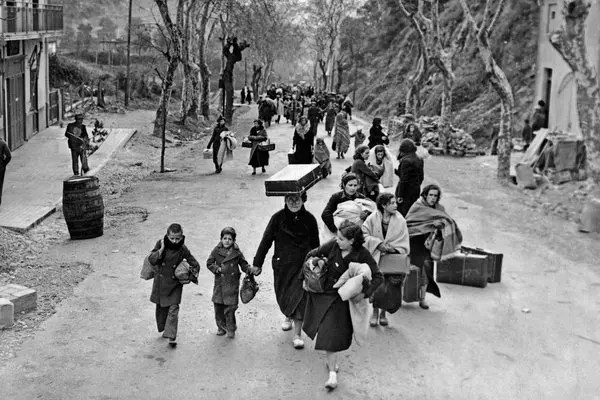
Listening to the Israeli national anthem, I saw images flash across my mind of convoys of people carrying what they can and fleeing their homes. Black and white images with closeups of children carried by weary mothers, the elderly stumbling as they will themselves to keep moving. I saw the suffering of people who for no reason other than their birthplace were signalled out for oppression and injustice, strategically set for mass extermination. I saw posters with images and headings designed to repel the world from these people, to dehumanise them, paint them as less than worthy of our thoughts, our empathy, even our basic pity.
The music sets the scene of the harrowing experiences of these people, though alongside the historic suffering of the Jews, I saw with painful irony, the very real and present suffering of the Palestinians.
Not a new parallel by any means, though what I find curious is the polarity of how these two people have responded to their suffering. Whilst one has stayed with their experience of suffering, expressed this in countless stories, films, books and music, created an industry, formed an identity heavily based on the tragedy, the other has reacted with resistance. Songs of the ultimate return to the homeland, traditional dance with open arms, chest flared and heads held high oozing defiance and pride, songs sing of identity and origins, resilience and survival.
Whilst one’s identity seems to hang on to the role as The Victims, the other casts themselves as The Survivors. Both responding to unforgivable trauma, committed by the state against them en masse, as other countries sit/ sat inactive, and in turn complicit.
As responses to trauma, this is not so different to the individual human experience, where after an event that proves ‘traumatic’ the person will react and in stages of healing, will need to accept their suffering, the fact that they were victims, and in time, accept that they also survived, because they are alive today. As they process their fear, anger, grief, they come to accept being both a victim and survivor, and in time, make meaning of their experience, eventually integrating this as part of their whole. The total sum of them as a human will be greater than these parts, these experiences.
In Israel, in spite of the country’s legitimacy largely founded on the legacy of the Holocaust, I would argue that they (as a nation) have not processed this unfathomable tragedy. Perhaps the legacy that shaped the victim mentality sits at the core of their national identity, and needs to be preserved:
‘We are the victims. We cannot therefore be the oppressors. We will forever be under potential threat, so we need to defend ourselves.’
Meanwhile, on the other end of the polarity, we have the Palestinians in Palestine. They are not in a place to process as they are too busy with the business of surviving. Instead, they will call on God’s will, and take whatever resource they can from their faith, including this belief inherited from the Christian bible:
“God does not burden a soul with more than it can bear.”
(Surat Al-Baqarah, verse 286)
Then we have the global diaspora communities, both Jewish and Palestinians, who potentially can be as invested in Israel/ Palestine as those living in the region. English Jewish youth groups who trek to Israel, are fed into the narrative that ‘this land is your birthright, regardless of where you live and who you are. You are only truly safe and accepted here.’ Palestinians, whether born in Canada or Jordan, will know that first and foremost they are Palestinians. They will know the name of the village their grandfather was from, the story of how their family home was taken from, may even have the key to their front door, which has come to symbolise their fight for the right to return to their Homeland. In fact, whilst admirable, this defiance and blinkered struggle has at times left the Palestinian global diaspora experiencing resentment, envy and degrees of persecution.
There is a lot that link these two people. Yet their parallel narratives that share so much cannot meet, for fear the other will negate its right to exist.
The reality of course is that both sides are both victims and survivors, and (in varying degrees) have oppressed and been oppressed. It is relative in that the plight of the Palestinians is painfully visible to the world, in spite of Israel’s best efforts to shield and divert, whilst the victimisation of Jewish communities is largely historic, though very real in their perception (even neuroperception).
A survivor struggling to accept her pain and fear, to grieve the sadness and loss her grandparents experienced, are as much a victim and at a disadvantage, as the person who perceives herself as a victim, and struggles to acknowledge the power and strength she yields.
So how can there be Jewish voices, some survivors and descendants of the Holocaust, speaking so bravely and eloquently in protest of the state of Israel’s actions? Why are Jewish individuals risking the terrible bullying and ostracisation within their own communities to speak-up for the Palestinians (like the nasty label ‘self-hating Jews’), or at least to call out: ‘not in my name!’
Well, I would argue that some of these people have “done the work”, so to speak, have gone through the often challenging/ uncomfortable/ painful job of processing (or working towards processing) the traumas left transgenerationally. They are in a place where they have accepted the pain, grieved, found ways to honour this part of themself, make meaning and move through. They are not stuck in a loop, forever falling out-of-awareness into the same patterns. Their eyes and ears are open.
I remain curious and unsure, even within this wide contemplative generalisation, what the path forward is. These parallel storylines, the similarities and polarities, like the poles of two magnets that repel each other when brought together.
Perhaps, within Maslow’s hierarchy of needs, it is impossible to contemplate historic wounds when danger is live and present. However, instead of trains full of children being rescued from starvation and destruction, or community-led bake sales to raise money for humanitarian aid, the main media diverts its attention away from Gaza and the West Bank, protesters grow tired, spin doctors spin tales to deflect and it becomes tempting to let the polar parallel lines run to infinity.
I’m not in the habit of sharing my dreams as a public post though today, here it is:
Last night I dreamt that I was living in some dystopian future where news broadcasts show how all human beings in Gaza have been killed, entirely erased, and the only remaining life is that of stray cats. The world expressed outrage that these animals were left alone to fend for themselves, and en mass mobilisations begin to support the helpless creatures. Like the response to Ukrainian families fleeing their homeland, cake sales in schools were being advertised, people were offering to host kittens and elderly cats alike, examples of rescued cats were shared to melting audiences. News coverage showed aerial photographs of cats walking amidst dead bodies of mutilated children, dead mothers holding their unmoving infants, all covered in the ghostly grey ash of a besieged Gaza. Near naked men, stripped and bound, half buried, remain motionless, as the camera’s focus brushes passed these to focus on the sweet furry animals. Celebrities post to share their sadness at witnessing such inhumane treatment of innocent animals, politicians criticise the Israeli government and its allies for inefficient post-genocide planning, failing to safeguard these sweet beings, during their siege of the land formerly known as Gaza.
In the dream, I was frozen. Felt gas lit as all around me seem to hum the same tune, and I looked around for someone to say something. I tried to speak but my voice was a whisper. At one point, my daughter nudges me, like she does in real life when I sing in public (!), pleading, embarrassed: ‘shoosh mama, pease…’ I’m unsure if to preach to her, scald or obey. I stay frozen.
I woke with that blissful relief that comes with a nightmare. We are not there (yet). I woke with the reality of a brave and defiant generation of young people, of students sacrificing all (putting their privilege to the test) to do what is right. I woke to notifications from the various pro-Palestinian protest groups, sharing updates and plans. As dystopian as aspects of today are, I am relieved to be in today’s reality than in my dreamscape.
Whilst I grew up with Jewish people around me (mostly Sephardic, and friends of the family), the first Israeli person I met was a girl in my sixth form college. Lee looked like snow white, with pale skin, blue eyes and short black curly hair. I can’t remember what started our conversation, but I do remember Lee mistakenly assuming I’m Jewish, and both of us eyeing one another up-and-down to take one another in. I was full of curiosity. At home, Israel was synonymous with Zionism, which was distinctly separated from Judaism, and as an Iraqi Muslim, loyalties were unquestionably with the Palestinian struggle. Lee looked a little stunned: ‘You are not what I imagined.’ We were both relatively naïve as teens, more children than adolescents, so our curiosities won and we became good friends; connecting on music (Lee played the piano and I, the flute), family anecdotes (we were both clowns and mimics) and generally enjoyed finding commonalities (and differences) in our love of food.
In my small circle of school friends, we had a typically diverse, London medley, Juan (an Iraqi Christian), Sama (a Muslim Sudanese) and Georgina (an English, originally Polish, Jew). Lee and I didn’t mix much in the group (she was shy and I was possessive). The one time we did, was when I invited everyone back to my family flat (empty on this rare occasion) to hang out. Whilst playing host, prepping some grub for my guests, I was oblivious to the war breaking out in my living room. I understood the instigator to be humous, or was it falafel? One claimed the dish theirs, and the other took offence. Before I knew it, the conversation bleed into religion, where the arguments essentially were: ‘Islam is a copy of Judaism, a false religion!’ to the response ‘Islam is an updated, all improved version!’ Then Georgina, perhaps in an attempt to distance herself from her Jewish peer, said something akin to ‘Your home was stolen!’, leaving Lee, tearful and upset, to shout out ‘and you’re a fake jew!’
Holding a tray with (what I thought were) delightful mezze nibbles, I was stunned. These were genuinely intelligent, kind and empathic people, how could they turn on one another so cruelly?
Fortunately for all of us, in this metaphorical war, we were all safe.
Over the last three weeks, I’ve written a lot (mostly Free Fall writing, streams-of-conscious babble) to try and help myself process some of the painful, very visceral feelings I’m holding. I’ve written to share as well, and I censored myself, for fear of hurting friends and the communities I’m part of, which I inadvertently have done anyway. Also, I didn’t want to label myself or set my family up as a target. I am relatively invisible, as far as my faith and ethnicity goes, so why not utilise my privilege and be silent. I’ve prided myself as someone who avoids sided-ness and moves best in shades of grey, with experience in community interfaith and conflict resolution dialogue, so why not continue to suffer in silence, only in the company of a trusted few, or to disengage entirely, keep busy, and keep ‘politics’ out of my day-to-day?
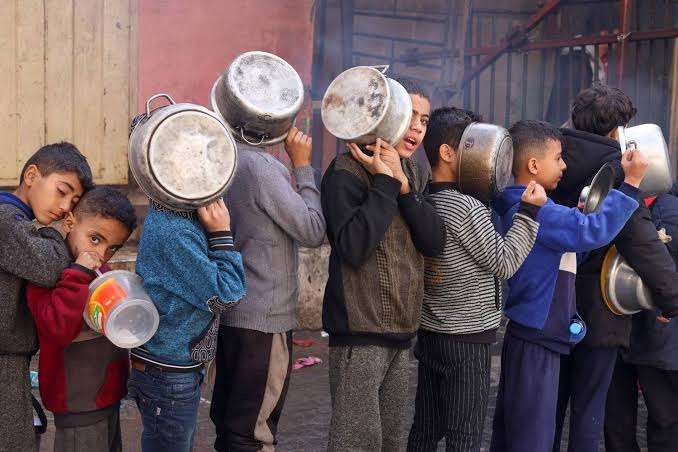
First, I’ve struggled to bear witness in silence- seared in my mind’s eye countless dead babies and children carried by a grieving parent or worse, a stranger- to carry this news of mass death, alongside quotidian chores; the morning rush to school, helping with homework, and working in schools. I have nightmares of my own children, and the children I work with, covered in dust, either dead or alive and waiting, hoping to be rescued. I’ve written my mobile number on my children’s arms, when taking them alone on a train journey or at the airport, in case we were separated. I imagine writing their names, for when their bodies are unearthed under rubble. I’ve found myself regressing into old patterns of dissociation, as I inwardly split myself from my overwhelming feelings, to plough through the everyday. I’ve written to try to contain, spoken with friends, made placards and demonstrated- not because I believe in the power of the masses (that belief died in 2003), but to be with others who share these feeling of grief, anger and confusion- and then there’s the social media rabbit holes, which echo back with images and words, validating my feelings when ordinary news channels lopsidedly fail.
It is clear to me that many of us do not feel seen or heard, and struggle to imagine how others cannot (or choose not to) bear the pain with us. It’s hard not to take it personally.
Second, I am in a position to have glimpses of both sides. Whilst my heart and gut pull me in one clear direction, I am now calling on my head to help balance, not only to see the other side, but to try and integrate (rather than split) and make meaning for myself. The body count and institutional power are factually imbalanced, and the call to ceasefire (to me) isn’t about sides, it’s about stopping more death. I want to listen to your suffering, and bear witness to your hurt and pain, and I cannot do this whilst you justify murdering masses in darkness. And I’ve heard almost identical sentiments from both sides.
The rawness in the first two weeks blinded me to much beyond a feeling of dread. The shock of the massacre on that fateful Saturday did not thaw, before the dread of knowing something terrible will follow and then, the truly terrible followed. Whilst both sides feel wounded, wronged and afraid of persecution (Islamophobia and antisemitism alike), these are happening in parallel. Suffering in sync, but separated by walls similar to ones I’ve seen in Israel/ Palestine, be these grey and bare on one side and masked with green foliage on the other.
I’ve carried a sense of hopelessness in the last week, not only with the continued violence and imbalance of power, but with the knowledge that both sides are crying out for help, feeling equally pained and afraid, surrounded either by echo chambers or apathy.
Are you against Hamas’ brutal attack?
Do you support Israel’s right to defend itself?
Sympathies with the Palestinian people is translated as somehow, condoning the tragic killings on that doomed Saturday. When, in reality, the reaction was so instant and bloody, there hasn’t been space to grieve. Hearing people, globally, chant ‘From the River to the Sea…’ is seen as a statement against the right of Israel to exist, and perceived as a threat to annihilate all Jews; because Israel has been so tightly interwoven into the Jewish identity (similarly to how Arabs and Muslims identify with the Palestinian struggle) making these threads a complex knot to untangle. The protests in themselves are perceived by many Jewish people as a threat, a repeat of the antisemitism they have experienced for centuries. I’ve heard a distressed mother say that her child will not take up their university place in New York, as the student union is strongly pro-Palestinian, and she fears for her child’s safety, and a good friend whose child is understandably frightened at the sight of police cars, parked outside their (Jewish) primary school. I sympathised, but struggled to deeply empathise, because I perceived these as imagined fears (and privileged positions), whilst there are human beings being blown to death as I type right now.
I don’t have answers—beyond the call to stop the killing— and to say to those who have invited me to join a healing circle, to consider a creative response or to start a dialoguic group, I am not ready to lead or be led.
If, instead of my failed attempt to reason with my explosive group of friends, those many years ago, if I had… well, I don’t know what I could have done, if anything. There was immense upset on both sides, and as teenage girl fallouts are pretty much the norm, we left it as such. Lee and I managed to repair our friendship, be it in our own peaceful bubble, until sadly, we lost touch at university, as Lee returned to Israel. I wonder where she sits now; adamantly planted on one side or choosing to precariously balance in-between? Could she be one of the Jewish Israeli voices, separating herself from her government’s actions, saying ‘not in my name’ or ‘never again for anyone’? Or perhaps she condones the deaths as ‘collateral damage’, the ‘reality of war’ and her country’s ‘right and duty to defend’ itself? Perhaps she is one of the many Israelis, choosing to shut themselves off from politics, to grab some sushi and enjoy a movie night with the kids at home (because that’s a privilege open to Israelis, as it is to us here and outside of Gaza, the West Bank and Lebanon).
I am purposefully, as much as I am able at this point, avoiding emotive words that describe the situation, choosing to set aside historical arguments for/ against either side, not because I don’t feel strongly with the meaning of some of these words, but because I fear the meaning are being lost, and the labels forbid our humanity from leaking beyond the side-isms. If I could, I would ceasefire now, and stop more killing of anyone anywhere. I can’t. Instead of swimming in the hopelessness I’ve felt, I’m choosing to swim through it, feel and share beyond other people’s posts and invitations to protest. I do want to connect with those I love, and as we agreed with a friend, to simply be with one another in silence, in tears, in hope that we can grieve together for the human lives lost, without the labels that sealed their fate.
Last night, my brother booked a family outing for us to see Derren Brown‘s Showman and the first few thoughts wrestling their way into my mind was that my show of choice would have been The Magic Flute or Hakawatis, not a magic show! Then the oily hypnotist character from Little Britain, who hypnotises his dates into ordering the less expensive options on the menu, popped into my head. This, before I snapped myself into excitement at a precious family outing and more generosity of spirit than I was allowing myself. Amidst a packed auditorium at The Apollo, I wondered if all these people are fans of magic and mentalists, like my brother, who is a talented storyteller, slight-of-hander and performer himself. What were all these people hoping to see?
What was on show was the power of the mind; both the conscious mind, which feeds us the narrative that best suits us, and the unconscious mind, like the dragon quietly laying under the waters. Hypnosis and Brown’s showmanship aside, the parallel that came to my mind was a webinar I had watched earlier that day, on working with children who have suffered sexual abuse. It seems a big jump from a West End show, but bear with me.
The speaker of the webinar, child therapist Valerie Sinasson, asks why the antelope feeds in front of the lion, and suggests this is in fact the safest place to be because the prey can keep their predator in sight, to know when they are hungry and about to attack. A similar pattern often plays out with children who suffer abuse at home, not just practically, in wanting to stay with their carer/ abuser, but inwardly, in their mind.
Our mind (and body) is amazing at keeping us safe, and to help us survive even the most unimaginable circumstances.
Sinasson references Fairbairn theory of Moral Defence, which theorises that a child, abused by their carer or someone close to them, is most likely to self-blame, and rationalise, for example, ‘this is only happening to me because I’m bad’ or ‘I behaved madly and made him hurt me’ rather than consider the possibility that the very person who is meant to protect and nurture is causing the most harm, which rationally is too much for that child to fathom. The notion that ‘Dad is doing something bad’ or ‘Dad is bad’ is both dangerous, as it makes home an unsafe place, and impractical, because a child is defenceless against a parent who is abusing them.
I keep my loved ones good and I take all the badness, goes the intelligent, survivalist thinking of the child suffering abuse. Not dissimilar perhaps to the many victims of abuse who grow-up to inadvertently (and unconsciously) perpetuate abuse as adults- whether as perpetrators, victims or/ and enablers- do so because on some level, they are keeping close to home, to what has always felt safe, normal and familiar.
Back to Brown, without giving away the content of the show, as specifically requested by the showman himself, I witnessed adults forget everyday facts with Brown’s hypnotic tricks, so that they, in a moment, alter their perception of reality to adjust to this missing information. I thought of how our mind does this in unique ways every day, when an emotion/ a thought/ a feeling/ a knowing is too much to accept rationally– perhaps it’s too painful, uncomfortable, frustrating or even, dangerous– so it is held onto by our unconscious, just in case. Reminders are sent out, when our unconscious believes we are safe enough to tackle this bit of info that has been filed away; a trigger (the term applied ad-nauseam) is the unconscious mind sending out an alarm, a reminder to tackle a feeling, a memory, an experience once hidden, buried away. This is why those suffering with PTSD often get triggers when they are in safer circumstances, not when they are in the battle field, so to speak. When I interviewed Iraqi civilians who were directly effected by the second Gulf War, it was often when they left Iraq, when they were physically safe in the UK, that they began to experience their first triggers, and later, some diagnosed with PTSD. Their mind and body– because our mind is our whole being not a separate entity– knew when an experience was too much to take head on, stored some of it away, and only brought it forward when the individual was deemed safe enough. Safety may not seem obvious to the individual, as it is after all, the unconscious mind acting, and the conscious mind is therefore left clueless as to the rational behind their responses.
I am in the business of providing a safe enough space for a person to feel able to bring to the fore their thoughts, feelings, experiences in the here-and-now, which may have been stored from an earlier time, and last night, I found myself welling up in the dark auditorium, both in awe of the power of the mind, and the unfairness of the world. The children who work so hard, on an unconscious level, to survive, and how much space is eaten up in that process of survival, and why so many fall behind in school, may seem ‘off with the fairies’, may shut down/ or act out aggressively, and how, if that is the only reality they have experienced, may find themselves falling into the dreadful patterns they were locked into as children. There is always hope, and to me, it is also immensely sad.
And then, ‘the perpetrators’ of abuse. Sinasson talks of how children defend their abusive carers, and watching Brown’s hypnotised individuals construct a new reality for themselves, I thought of the abusers. Not just those who abuse children, but to my mind, the toxic men who intimidate and coarse their partner, and to someone else, appear soft spoken, intelligent and possibly successful professionally. How does that work? Can both realities co-exist? To the outside, it may appear that the partner is not being sensible/ inciting frustration/ and in other words, being bad in some way– which is how we as a society, as family members/ neighbours/ friends can inadvertently gaslight victims of abuse– or these perpetrators are unknowing showmen, living a different reality their mind has cleverly constructed for them. Perhaps the idea that they are abusing their partner is too painful and the possibility that they, as someone likely to have experienced coercion, manipulation and bullying themselves, are now the coercive, manipulative bully, is too much to take head on; and so they delete this bit of fact from their mind to live with a cleaner, easier, safer life for themselves.
This pattern should not atone for their abusive actions, though it may help their victim/ survivors to understand that their experience of abuse is theirs and may never be accounted for by their perpetrators, because their abusers may never feel safe enough in themselves to face their actions. Irmgard Furchner, the former Nazi secretary found guilty of crimes against humanity, will likely hold onto her version of reality, which her unconscious has cleverly constructed for her, than take accountability, though in this case (relatively rare), her silent victims receive a form of justice that says: we don’t need you to accept your part in this, but we see you, and in front of the world, you will be charged. Regardless of the length of sentence Furchner received, I believe the outing of someone who has remained hidden, in more ways than one, is of immense importance. I sincerely wish all those surviving abuse, irrespective of their age and circumstances, receive their form of justice.
I now realise that these hoards of people squeezed into The Apollo had come to witness their own power, which Brown skilfully reveals through emotive storytelling, hypnosis, magic tricks and special effects. Brown, to me, was the medium in which I was able to be with both the awe and discomfort of the power of my reality. I felt small in my conscious mind, and intimidated by how much I don’t know I know, and wondered at the reality we each construct for ourselves, every single moment of each day.
Perhaps this is the power of the arts too, particularly performance, whether opera or a magic show, in highlighting something we can easily miss so that it is on show for us to examine, protest, adore, wonder at, write about…
Two years ago, whilst I was going through a particularly turbulent time in relation to an individual in my life, my therapist invited me to practice saying the following inwardly: ‘Thank you, you are giving me exactly what I need.’ At the time, I was too overwhelmed to appreciate the statement, though her words stayed with me, and whilst I continue to manage my relationship with said person, I’ve found grounding and hope in that whatever I am receiving right now- no matter how frustrating, disappointing or painful- is what will ultimately deepen my understanding, create meaning and enrich my world.
My therapist (at that time) was practising transpersonal therapy, which integrates spiritual and transcendental human experiences as part of the therapeutic process. Essentially, taking into consideration the whole, beyond the human individual. She linked the statement to the Buddhist notion of Karma– more in relation to unfinished business in past life than good or bad deeds- though I found meaning within my own faith through kisma wa naseeb/و نصيب قسمة (concepts akin to ‘fate’ or ‘fortune’, deriving from the Arabic root of ‘part’/ ‘share’ respectively). I understand both to be the small part or share of the whole, namely, what I am experiencing is part of a much wider picture that I cannot fully comprehend. To accept this part, the fortune I am given- particularly when it is unsavoury- is to trust in Divine wisdom, and that all parts fit, even if I am unable, from my vantage point, to see exactly how.
This faith that I hold, particularly in my darkest hours, is my spiritual container, what essentially holds me when I am struggling to hold myself.
In moments of happiness and deep gratitude, my impulse is to thank God, and when at an ebb, when life seems relentless, I am at God’s mercy. On both ends of the spectrum, I trust that what I am getting right now is what I need and deserve, and importantly, what I can manage. The belief that I can carry whatever adversity lays in my path is an extension of my faith, namely, that God would not burden an individual beyond her capacity is a concept carried from Christianity into Islam. In both cases, the concept highlights that ‘God is not the giver of trouble. God is the giver of Life.’ Ultimately, God is my Protector, a loving forgiving presence, who is able to see beyond what I see, to hold me even when I struggle to hold myself. This is when faith is a resource, a container to hold the more turbulent moments in life, and a regulator of intense emotions and pain. And to engage and to be with difficult emotions, like anger, envy or hatred, rather than dismiss and deflect these, is (in my belief) part of my spiritual process, because I am endeavouring to emulate God’s infinite capacity to hold all, which I ultimately will fall short of. God ability to give life, as well as takes it, to expand as well as constrict, means that these facets need to exist together, and are neither good or bad, but part of a greater whole. See Neil Douglas-Klotz‘s wonderful book on applying God’s 99 Names to daily practice).
I leave you with a well known prayer to welcome the new year, which helps me remember that accepting my fate is a mindful, reflective practice, not a passive act, and an extension of my faith in both humanity and The Divine:
“God, grant me the serenity to accept the things I cannot change, courage to change the things I can, and wisdom to know the difference.“
If you do not know how to take care of yourself, and the violence in you, then you will not be able to take care of others. You must have love and patience before you can truly listen to your partner or child. If you are irritated you cannot listen. You have to know how to breathe mindfully, embrace your irritation and transform it.
We did a family camping trip last weekend, and I felt like a warrior mother, sharing my tiny borrowed tent with my two children, weathering a thunderstorm one night, loosening up routines that ordinarily bind our hectic life together…and letting go to discover, find joy in simple pleasures and to celebrate being together with the minimal every day comforts (often invisible, taken for granted). The fun my children had, at this mini break, was familiar to me from my own childhood, as I watched them exploring the surrounding nature, make new friends and even make do without their toys and routines.
This familiarity stems from my own mother taking my brother and me out to a water reservoir in the desert, when we were children in Iraq (ثرثار), where with several other families, we spent days swimming, cooking and eating together, playing with friends, making new ones, almost always falling asleep outside, only to wake in the car the next morning. The discomfort of that sleep was counterbalanced by the excitement the next day offered.
The challenges were different -swap thunderstorm, mud and damp clothes for scorching heat, lack of natural shelter and sun burn- but the spirit of adventure, of a mother not playing it safe as a single parent, modelling strength alongside vulnerability (she was always discovering alongside us, avoiding the Super Hero role some parents cling to). To this, I am grateful to my mother.
One week ago today, my mother won the highest award her profession has to offer. Whilst this was an honour, what has taken us all by surprise, is the public response she has had. People she knows well, old school friends she hasn’t spoken to for decades, former students, to complete strangers, poets and artists, eager to share their joy, the pride they feel as fellow Iraqis that one of theirs has shone on a global level. I believe this has touched my mother’s heart more than the award itself.
What this award fails to acknowledge is how this woman built and rebuilt her life as war, sanctions and political unrest dictated much of her life’s trajectory. Her career has been the one constant, perhaps a refuge, from all the unknowns, anxieties, fear and anger. Whilst some turn their anger and sadness inward to starve themselves, smoke or exercise to vent, others transform these powerful emotions into ambitious drive, a determination of the same intensity as someone escaping a frightening predator. This is my mother.
To take pleasure, to lose herself, to escape, she reads, she writes, to connect and feel, she teaches, to energise and create, she designs. The line between personal and professional, pleasure and work, friends and colleagues, is thin, if invisible. My mother’s career became her backbone, what kept her up and alive, to strive and keep a sense of normality amidst the unpredictability that infected her life, our life, as this continues in our MENA region and globally. Those inspired by her, project onto her their own successful future, a determined optimism, an escape from yesterday’s pains and today’s unknowns.
I want to acknowledge my mother’s other role, which is rarely deemed worthy of an award; that of being a mum. I was aware from a young age that my mother has a life beyond me, my brother and our home. She has students, colleagues, an office, conferences and late nights facing a drawing board. Bedtimes were at 6pm, which I bitterly resented as a child, to make space to continue working into the night. I knew this work was important, and as a child, felt equal measures of frustration and pride.
Back to my own family camping trip, this was exclusively with a group of single mothers- some separated from life partners, others bereavement and some by choice- as I watched these woman, all smiling, supportive, playing, cooking, telling off, I wondered at the invisible pain and sadness that intruded on their lives and the coping strategies that have been put in place. I know from my mother, her hard work and determination sit alongside the pain, loss and fear she has experienced in her life.
Did I ever wish I had the Middle Eastern mum who greeted me home after school with freshly baked treats and cuddles? Or the mama who visits me in London, as a young adult, to cook, stuff my freezer full of food and clean my flat before returning home? Did I envy those with mothers busying themselves with matchmaking, closely followed by pressure to produce grandchildren? Sometimes, yes. And today, as a mother myself, I take comfort in the belief that if I was to go full force ahead to pursue my passions, realise my talents and adventure alongside my children, I know that they will grow with a sense of their own power, dreams and strength to find what sustains and revitalises them. And, if like me, they don’t settle on one profession, choose to wander and discover, then to know their mother would love them unconditionally, and besides, she has her own life to pursue without the need to live theirs.
I stood to gaze at the bones of a young child, who died of brittle bone disease some 5,000 years ago, exhumed in Egypt sometime in the 19th century. My young children nudged me to read the caption, and I hesitated, wondering: is it morally, ethically acceptable to display human remains in museum exhibits? Put on display in the same vein as a coin, a chair or another inanimate object?
The ‘mummy galleries’ at the British Museum attract ‘more visitors per year than any other area of the Museum’s public space’. I studied archaeological science at university- including human skeletal studies, i.e., ageing and sexing bones etc- and I hadn’t quite considered the matter ethically until last week. Perhaps with my own mortality closer at hand and looking at this child, not much older than my own.
The Egyptian mummies at the British Museum are a familiar classic, which I’ve enjoyed in my own childhood, and enthusiastically took my children to visit after school. And last week, an insight landed on me like a bucket of warm water; these displays were once living and breathing human beings, not too different to you and me. This was someone’s child, and the others were someone’s mother, grandmother…
Even the humblest of archaeological enthusiast would be familiar with the process of mummification. Essentially, loved ones cared for their dead in a very particular way, took exceptional care, precision and cost to secure their life in another world, beyond this one. This is not the ending they had envisioned. The voyeuristic stance I took, looking at these people in cases, left me with immense guilt. This is objectification, Orientalisation and colonisation, all proudly exhibited.
I wrote elsewhere on my belief in public collections of a private (here), and the complex issue of funding. I believe, regardless of the colonial powers that acquired the British Museum collections, these are best cared for and safest here. This applies to archaeological heritage from my own country of origin; the Babylonian and Assyrian reliefs, the Balawat gates etc. With much disagreement in my own family, I believe our country is too political volatile, constantly threatened by religious (and non-religious) fanatics, under skilled, under funded and unable (right now) to care for these world heritage objects. More, these glorious objects will not be viewed by anywhere near as many people as the ones here and in other privileged countries.
However, this thought is specific to human remains from whatever age, from whatever culture, humans who once lived, who had children, and mothers who grieved for them and who died and were desperately missed by loved ones, or even if they went unnoticed, forgotten.
If I tragically lose my child, I would not want them put on show for others to gaze at, and luckily, I don’t imagine anyone would be interested in such a display. And today’s present is tomorrow’s past, a foreign country to excavate and escape to.










 starakin