Earlier this week, I watched the viral clip of the young, Swiss fencers who turned their backs away from the flags and anthem of Israel by means of expressing protest (watch clip).
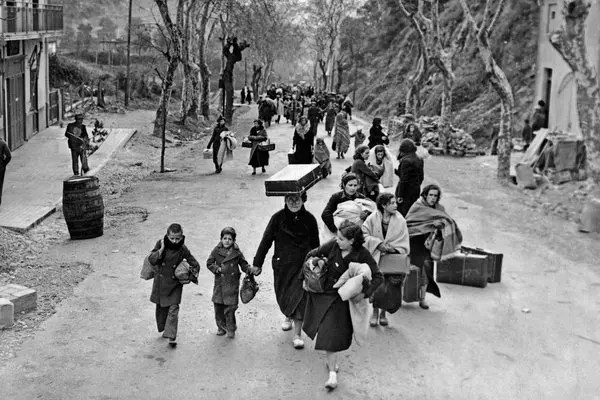
Listening to the Israeli national anthem, I saw images flash across my mind of convoys of people carrying what they can and fleeing their homes. Black and white images with closeups of children carried by weary mothers, the elderly stumbling as they will themselves to keep moving. I saw the suffering of people who for no reason other than their birthplace were signalled out for oppression and injustice, strategically set for mass extermination. I saw posters with images and headings designed to repel the world from these people, to dehumanise them, paint them as less than worthy of our thoughts, our empathy, even our basic pity.
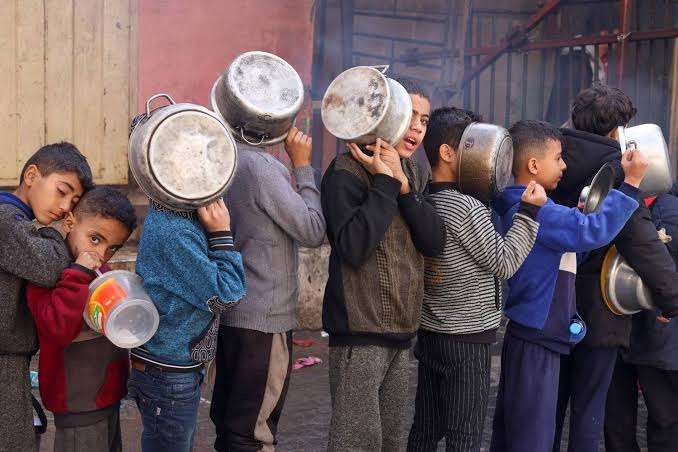
The music sets the scene of the harrowing experiences of these people, though alongside the historic suffering of the Jews, I saw with painful irony, the very real and present suffering of the Palestinians.
Not a new parallel by any means, though what I find curious is the polarity of how these two people have responded to their suffering. Whilst one has stayed with their experience of suffering, expressed this in countless stories, films, books and music, created an industry, formed an identity heavily based on the tragedy, the other has reacted with resistance. Songs of the ultimate return to the homeland, traditional dance with open arms, chest flared and heads held high oozing defiance and pride, songs sing of identity and origins, resilience and survival.
Whilst one’s identity seems to hang on to the role as The Victims, the other casts themselves as The Survivors. Both responding to unforgivable trauma, committed by the state against them en masse, as other countries sit/ sat inactive, and in turn complicit.
As responses to trauma, this is not so different to the individual human experience, where after an event that proves ‘traumatic’ the person will react and in stages of healing, will need to accept their suffering, the fact that they were victims, and in time, accept that they also survived, because they are alive today. As they process their fear, anger, grief, they come to accept being both a victim and survivor, and in time, make meaning of their experience, eventually integrating this as part of their whole. The total sum of them as a human will be greater than these parts, these experiences.
In Israel, in spite of the country’s legitimacy largely founded on the legacy of the Holocaust, I would argue that they (as a nation) have not processed this unfathomable tragedy. Perhaps the legacy that shaped the victim mentality sits at the core of their national identity, and needs to be preserved:
‘We are the victims. We cannot therefore be the oppressors. We will forever be under potential threat, so we need to defend ourselves.’
Meanwhile, on the other end of the polarity, we have the Palestinians in Palestine. They are not in a place to process as they are too busy with the business of surviving. Instead, they will call on God’s will, and take whatever resource they can from their faith, including this belief inherited from the Christian bible:
“God does not burden a soul with more than it can bear.”
(Surat Al-Baqarah, verse 286)
Then we have the global diaspora communities, both Jewish and Palestinians, who potentially can be as invested in Israel/ Palestine as those living in the region. English Jewish youth groups who trek to Israel, are fed into the narrative that ‘this land is your birthright, regardless of where you live and who you are. You are only truly safe and accepted here.’ Palestinians, whether born in Canada or Jordan, will know that first and foremost they are Palestinians. They will know the name of the village their grandfather was from, the story of how their family home was taken from, may even have the key to their front door, which has come to symbolise their fight for the right to return to their Homeland. In fact, whilst admirable, this defiance and blinkered struggle has at times left the Palestinian global diaspora experiencing resentment, envy and degrees of persecution.
There is a lot that link these two people. Yet their parallel narratives that share so much cannot meet, for fear the other will negate its right to exist.
The reality of course is that both sides are both victims and survivors, and (in varying degrees) have oppressed and been oppressed. It is relative in that the plight of the Palestinians is painfully visible to the world, in spite of Israel’s best efforts to shield and divert, whilst the victimisation of Jewish communities is largely historic, though very real in their perception (even neuroperception).
A survivor struggling to accept her pain and fear, to grieve the sadness and loss her grandparents experienced, are as much a victim and at a disadvantage, as the person who perceives herself as a victim, and struggles to acknowledge the power and strength she yields.
So how can there be Jewish voices, some survivors and descendants of the Holocaust, speaking so bravely and eloquently in protest of the state of Israel’s actions? Why are Jewish individuals risking the terrible bullying and ostracisation within their own communities to speak-up for the Palestinians (like the nasty label ‘self-hating Jews’), or at least to call out: ‘not in my name!’
Well, I would argue that some of these people have “done the work”, so to speak, have gone through the often challenging/ uncomfortable/ painful job of processing (or working towards processing) the traumas left transgenerationally. They are in a place where they have accepted the pain, grieved, found ways to honour this part of themself, make meaning and move through. They are not stuck in a loop, forever falling out-of-awareness into the same patterns. Their eyes and ears are open.
I remain curious and unsure, even within this wide contemplative generalisation, what the path forward is. These parallel storylines, the similarities and polarities, like the poles of two magnets that repel each other when brought together.
Perhaps, within Maslow’s hierarchy of needs, it is impossible to contemplate historic wounds when danger is live and present. However, instead of trains full of children being rescued from starvation and destruction, or community-led bake sales to raise money for humanitarian aid, the main media diverts its attention away from Gaza and the West Bank, protesters grow tired, spin doctors spin tales to deflect and it becomes tempting to let the polar parallel lines run to infinity.




 starakin