
‘Fear is excitement without breath’ is a famous quote by one of the founders of Gestalt Therapy, Fritz Perls. His partner, Laura Perls, arguably, had a major influence on the birth and development of this therapeutic modality, particularly in its focus on embodied work. This wasn’t a free association process, with a patient talking away uninterrupted, their head spinning from a sparking unconscious, whilst their body sinks into a sofa, dead to the world. This was about being in relation (or in contact) with our world (inner and outer), building an awareness of ourselves in the here-and-now, as well as out in-the-world, and how to meet at the boundary between you and me. Laura Perls’ thinking was ahead of its time, and her partner, the male, maverick, showman, fell into an all too common historic pattern, where the wife/ the mother/ the woman/ the female contributor is missed.
Her ‘breath work’ invited clients to ground themselves, to tune in, be aware of their breath, in order to really be present, with themselves first, then with the other. She spoke of the importance of self-support, and that the work of therapy, or even the work of living, cannot fully take place if the client has not found their own ability to support and resource themselves. She spoke of ‘living on the boundary, one must have access and use of one’s excitement, and if you get anxious instead of excited, it means that you don’t allow yourself to support the development of excitement with the increase intake of breath.’ This all feels like the root of the famous Fritz quote, and I wonder of the intimate conversations, the thinking aloud and the influences that fed the mouthpiece, the script that played the actor.
‘Real creativeness, in my experience, is inextricably linked with the awareness of mortality. The sharper this awareness, the greater the urge to bring forth something new, to participate in the infinitely continuing creativeness in nature, This is what makes out of sex, love; out of the herd, society; out of wheat and fruit, bread and wine; and out of sound, music. This is what makes life livable and incidentally makes therapy possible.‘
Quotes compiled by Anne Leibig, and full article can be found here.

For this international women’s day, I am thinking of the unsung intellectual women, the creative conceptualisers, the lateral thinkers, the rational brains that were held in the form of the female sex, who as a result were silenced, and if we are lucky, some have since found their voice back to us, to sing a tune from beyond.
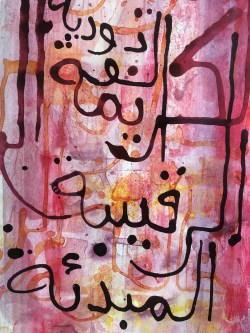
Responding to a tweet, I imagine was written in humour, has activated my otherwise fatigued grey cogs:
With increasing news of how Covid is impacting mental health, both for adults and children, I wonder at our ability to envision wellness, a different, more ‘positive’ future, not just as individuals, but as a society…
There are real, direct and practical implications of Covid and the restrictions it has enforced locally and globally, for example, closure of schools and loss of jobs, delayed response to GP and mental health facilities (already strained and slow pre-pandemic), as well as the pressure cooker of families all working and homeschooling in the limits of shared physical space, single-households more alone and isolated than ever, and the closure of leisure, cultural and sports venues… and I wonder if amidst all this, what was already in short supply is proving particularly dangerous, namely, our ability to tap into our sense of resilience, not just to cope with the present but to envision a better future, is drowning in the currents.
I used quotation marks for ‘positive’ because I grew bored and cautious of the term, when used as a delusional broad brush stroke for an IG filtered facade, denying anything deemed draining, dark, unattractive, not Like worthy. Positive Psychology for example, is largely about honing in and bolstering the strengths, raising awareness of what is working, not just what isn’t. As well as meditative and spiritual practices, from mindfulness to daily prayer, there are practical applications to professional and institutional workings aimed at re-orientating focus from ‘what are we doing wrong?’ to ‘what’s working?’
‘Appreciative Enquiry is a fundamental shift in the overall perspective taken throughout the entire change process to ‘see the wholeness of the human system and to “inquire” into that system’s strengths, possibilities, and successes’ (Starvos et al. 2015).
When I was introduced to Appreciative Inquiry by a supervisor on a pilot humanitarian project in 2014, I felt like someone had ushered me into a parallel universe, where my starting point was an inquiry into what’s already working, then imagining how good it could be, conceptualising my ideal vision then creatively sourcing the steps I need to get there. I often arrived at sessions exhausted and full of the struggles and realities of working in a refugee camp inside a developing country (already struggling with its hosts let alone its migrants!). Whilst I felt my feelings were held, validated and attended to, I was also invited to stay curious with ‘what am I doing well?’, which for me, often needs to be excavated from the rubble of ‘what didn’t I get right this time?’ attitude. Something as simple as having managed a session where the children didn’t all shout at the same time for an hour, where we managed to draw a picture together, move to music, play a game…or the mothers attended the weekly Women’s Circle; I remember reviewing my discouragement that then the women often brought their daily chores with them (peeling potatoes, folding clothes, breast feeding their infant), smoked and joked alongside the deeper sharings and breathing exercises, until I saw that they were claiming this space as their own, and this is something to celebrate, not commiserate because I wasn’t managing to recreate some Californian, Esalen-eque group in South Lebanon (!). These simple realities would have been easily missed, when this transient community had no promise of stability, when the host population was being attacked by ISIS, who were (then) the newest monster to crawl out of the woodwork, screaming a vision of beheadings and enslavement.
I imagine for the majority of us, it’s so easy to believe I am not as competent as others perceive me to be, where concepts like Imposter Syndrome were originally conceived with high achieving women in mind, and I would argue, alongside these women, stand the BAME/ IPOC/ other minority acronyms for people who were told a story that no longer serves them. Transactional Analysis’ Critical Parent ego state arouses the inner voice of the parent who put you in place as a child, who told the 8 year old you that you should be this and that, who reprimanded me for asking too many questioning, who told you that you needed to watch your weight, who said that girls shouldn’t speak too loudly and that big boys don’t cry… these voices weave themselves into our inner fabric, so that I don’t recognise theirs from mine. You don’t need to be believe in a one true voice, though perhaps recognise the voices that serve you today. What are the Nurturing Parent voices that hold, soothe, energise, propel, and encourage me to realise my dreams, to creatively envision? A Critical Parent is still needed, for example, to be on time to my dentist appointment (if I can get one!), to stop myself from watching a fourth episode of a Netflix series, and a Nurturing Parent parent may come in to encourage you to have a soothing bath and catch some rest, to help me see that maybe I needed to watch the fifth episode because I’ve worked really hard today and needed to vegetate and reboot. Not put me in time-out, scald with reprimands that diminish and humiliate me…
I mentioned spirituality, which includes faith and religious practice for me, and whilst I appreciate many are (rightly) cautious and skeptical, it’s still a key resource for many. I’ve been revisiting the Muslim and/ or Sufi practice of evoking God’s 99 Names, where polarised, expansive facets of the Creator, nature, the cosmos, are roused within. For example, Al-Jame’/الْجَامِعُ guides towards a pathway of gathering, whether of people in your life or of the resources needed at the moment, inviting a process of gathering parts of yourself that can help you better reflect your purpose in life; or Malik Al-Mulk/ مَالِكُ ٱلْمُلْكُ offering an opportunity to open your heart to a passionate vision that would compel you to live your life in service to Unity. Unity of self, of your home, your community, world, past-present-future and also, according to the spiritual belief, unity of God. Not in a shouty fanatic way, but in an inner, integrated and grounded way, holding both the challenges of reality, alongside gratitude, joys, beauty and accomplishments worth acknowledging (maybe celebrating) at every turn.
This is what propels me, what nourish and feeds me, and what I believe can support moving away from the black mirror of society, to a brighter, more silvery one.

Addressing a group of children in Arabic, from a children’s home (or maytem/ orphanage) in Basra, Iraq, in 2013:
‘I know I’m here to lead this workshop, and we will hopefully play, have fun and learn from one another, but to do this, I need your help. My Arabic is very, very, veeeeery rusty’, the children giggle, and look equally surprised as excited, ‘so I will make a lot of mistakes, and need you to correct me… I may ask you for help, but sometimes I wouldn’t even know what word I need or if I’ve made a mistake, so you need to jump in to help… Can you please help me?’
I’ve been reflecting on this experience, as I read Shanaaz Hoosain’s thesis (from 2007) on Resilience in Refugee Children: A Gestalt Play Therapy Approach and how ‘that language barriers appear to be a problem in therapeutic work with refugees. However, the researcher found that this can be effectively used in play therapy as an opportunity to empower the child.’
Though I didn’t have this knowledge at the time, I was nonetheless training in Gestalt psycotherapy at the time, and undertook wonderful Jon Blend‘s teaching in Gestaltist Violet Oaklander‘s creatively therapeutic work with children. Still, I was working intuitively and sincerely.
Since my last visit to Iraq as a teenager, I had not needed to speak exclusively in Arabic to people who did not speak some English. I was nervous about leading 3 workshops a day, for one week, with three different groups of children and adolescents, all to be conducted exclusively in Arabic. I found naming this difference, between me and the children, and also, openly acknowledging my limitation in relation to a life skill they had mastered, was a great icebreaker. It paradoxically brought us closer together, and encouraged the children to take control, to speak to an adult in a way that is normally culturally inappropriate.
From previous workshops, I’d found that asking simple introductory questions at the start of the workshop, like ‘what are we doing today?’ or ‘what did you notice on your bus ride here?’ were met with blank expressions, quick glances between participants to check if anyone has an answer to this bizarre question. I’d facilitated workshops in the UK, some in state schools in deeply underprivileged parts of London, but this barrier, this response to figures in authority, wasn’t as rigid. If I was there to run a drama or art workshop, for example, then I was seen as less important and less scary than a teacher at their school.
As a child, I was rarely asked a sincere question by an adult, be this a teacher or family member. Questions were often used to test, where there was a clear right or wrong answer, and anything in-between was viewed as disobedient. So I got the children’s response, and I respected their well-founded fear of the repercussions of getting it wrong.
I simplified my question to, ‘what is your favourite food?’ and when my question was met with heavy silence, I disclosed (sincerely) that ‘Mine is bamya ou timan and of course with 7ikaka…’, which received some recognition, and with another prod of ‘ah, does anyone else like bamya? 7ikaka?’ Low and behold, Middle Easterners connect with one another on the subject of food!
Later, I left all such verbal introductions after an initial simple game, where even the rules I managed to explain through physical and facial expressions, so we connected through play and shared experiences. Play, connect, share and make meaning together.
Today, back in therapy training, I wonder at the therapeutic barriers that exist, whether cultural, racial, linguistic, and how we can meet the client in the here-and-now whilst holding the differences between us. What form do these barriers take when they are translated into boundaries, those that keep us safe, though still arguably entrenched in Western models and processes? How can I, as a non-European therapist, adapt these (and to these) whilst staying true to my own background and cultural integrity?

‘I don’t celebrate Christmas’ sounds overly harsh to my ears, a little too Scrooge-like for an occasion that celebrates family, connectedness, sharing of presents and feasts, cracker jokes and prayers. What’s not to celebrate? For me, I simply did not grow-up with Christmas, first in Baghdad, then in London but within a diaspora bubble.
My first experience of a British (English) Christmas was at the ripe age of 22 years, when a generous university friend invited me to their family home for the occasion. My friend’s parents refused to accept that I would spend Christmas alone- I did not have any family in the UK at the time- and insisted that they adopt me for the holiday period. I remember feeling particularly foreign and alien to the tradition, which I was vaguely familiar in a ‘I’ve read about this’ or ‘I think I’ve seen this in a film’ type way. I felt a little like I’ve stepped into an odd reversed National Geographic experience, where I am observing white English people in their natural environment, following their unique customs and rituals… having said that, I’d been to Midnight Mass with a different university friend before that, and was perplexed and saddened that they kept their Christian practice hidden from our social group (predominantly English, UK born and bred), for fear of becoming the subject of jokes. I openly fasted in Ramadan- though the main response for this was silence- I was confused as to the open hostility of Christians practising their faith, but all unanimously celebrating Christmas… it’s like Christmas has been sieved of it’s Godly message to be a safe shell of presents, food and fun with the family.
Even though I’m proudly British now, these customs remain alien to me. When such nuances come into a discussion, I find myself feeling like a polite guest being hosted by people of a different culture. My understanding remains, often, superficial, disembodied, lacking the visceral memories that help understanding penetrate on a deeper level.
I wonder, this year, if the core of the ritual has come to life more for many. As the threat of ‘Christmas being Cancelled’ becomes a reality, I find that whether a family has chosen to take the risk to be together (at any cost) or has agreed to stay in their own bubbles, something of the essence of Christmas has surfaced. Whilst on the one hand, Zoom family gatherings can seem disembodied, I’ve heard many make peace with the quiet, cocooning of immediate family, or the reflective sides of solitude. There seems to be more awareness of who is spending Christmas alone, and people reaching out to check-up on friends, loved ones to see how they will be in this time. I find this deeply touching.
In my heart, I feel a shot of sadness, as I accept that my children’s childhood will feature Father Christmas, lights, a decorated tree and presents for this time of the year, whilst the traditions I grew-up with, will remain alien, clearly marked by the difference between their different norms at nursery/ school and our home. I think of my Christian Iraqi friends and their families, whose minority experience I had not considered (sitting in the privileged majority position!), until I myself became a minority. I wonder how they might have felt, when Eid was a giant explosion of colour, feasts, new clothes parading to visit friends and families, and their Christmas was a smaller event, still celebrated, though on a smaller scale. My brother’s first sighting of Santa, in a hotel in Baghdad in the 1980’s, resulted in a fearful explosion of tears, as he clung to my mother, desperately screamed to all around him that this is the ‘Big Bad Wolf!’
Accepting my children’s dominant language, cultural references and ways-of-being in the world as fundamentally different to my own childhood’s is a reality that I continue to make peace with. I hope to celebrate the essence of all of these traditions from celebrating Jesus the Son of Mary, the love, acceptance and peace he had offered to the world… at their essence, these stories intend to keep us together, to help connect us to one another, as well as to our inner well of strength, patience and security.
Wishing everyone a peaceful, restful and quietly joyful Christmas…

How can we engender change? Be this, in one human being, within a family, in a community, a society? And if changes are made, how do you integrate these into the institutions that manage our lives? And if an institution implements some changes, how can they integrate these, so that it flows into being, and not stumbles like Frankenstein’s monster, an amalgamation of uniquely disparate parts?
Integration of change is what helps a person feel (and to be) whole.
If you want to change a habit, like smoking, it would help if you adjust your other habitual patterns to support that change. Why were you smoking? What was it supplementing? What resources are you putting in place to help catch you when you’re stressed or surrounding by smokers, and when you inevitably slip into another smoke? What if you want to set-up a support group to resource yourself? And if this group begins to grow, and other substance abuse issues become relevant? How do you accommodate new members and different habits? What if you tackle the tobacco industry, to change the system that sell cigarettes? Do you set-up camp outside the factory or head offices, demonstrating daily, getting news coverage and expanding the movements? Do you invite those who might benefit from your movement to engage?
Tobacco companies rely on smokers to smoke in order to make profit. Though if smoking is exchanged for racism, ie, tackling racism on a personal level, to communities and institutions, then would the case be different? If a system is inherently racist, is it not relying on that statuesque, that imbalance of power, to function successfully?
According to DiAngelo, all ‘white people’ are inherently racist, because this is the system they come from. This has evoked a lot of anger and controversy in the US, especially as DiAngelo’s framework positions American history at its bedrock. Much of her argument applies to the UK, and I imagine, in a contorted, ‘reversed racism‘ way, to countries created and colonised by Britain and other European powers. We look to the West for standards of living, from education and the arts (discarding vernacular learning material and losing oral and traditional music) to beauty (nose jobs and Brazilian Blowouts!). Often, even after many decades, these changes remain superficial, like attached limbs. I may pass for Spanish, dressed in a flowing dress with long flowing hair, study in an American University of [insert name of a capital from a Developing Country], sip a glass of wine or grab a Happy Meal at McD’s (bit of an odd combo!), but scratch beneath that skewed Western model, my inner working system remains as imbued in racism, sexism and whatever forms of marginalisation my family, community and I have come from.
How do I integrate changes so that the facade flows with the interior? This is something I’m grappling with as part of a diversity student group at my therapy training college, so both the personal and family examples, as well as the community and institutional ones are relevant.
I’ve taken action in the form of classical activism; placards and letters, petitions and rallies, almost all in the context of anti-sanctions and war. That’s what it took for me to hit the streets, as a 19 year old, to talk (in my odd Americanised Arabic accent) to complete strangers in Sheffield town centre. I felt utterly conflicted when my halls of resident cohort refused to sign my petition, in support of lifting economic sanctions. They didn’t have a reason beyond: as this is my government’s decision, it must have value. I wasn’t angry towards them. I was confused and disappointed. Being with them after that, I was careful to exclude the parts of me that might come across as ‘overly foreign’/ aggressive/ overtly Arabic/ Muslim etc. Our friendship became stunted, as I wasn’t able to bring myself fully in, and in time, unsurprisingly, was lost.
I also found that the Socialist Party folk, who instigated these passionately fuelled actions, blew with the newspaper headlines. When Iraq wasn’t on the front pages, they moved on to the next hot topic, and I moved away from them too. I’ve since worked with burnt-out NGO workers, who seemed unaware that were barking instructions on the very people they were meant to be helping, who raged at an invisible system and were utterly fed-up. I worked in charities that patronised the underprivileged; cultural centres and art organisation who championed the underrepresented, and that’s all well and good, but how do we change the bigger structure that holds all this together? How can we hold our anger/ fear/ guilt to really meet the other, to engage in productive steps forward.
What I didn’t like about DiAngelo’s book is the immense shame it roused in people, who are the very same who need to wake-up, to enable, to ally with the Undepriv’s and Underrep’s. That shame triggers rage or worse, from my perspective, silence. Neither are conducive to real change, as both are likely to lead to various forms of disengagement. That’s the fragility; the threat that I may destroy the very system that sources my power. It’s a big ask. Why should I put myself at a disadvantage to help you?
What I do like about the book is how DiAngelo sets deeply productive steps to inform, to engage, to move forward (and I need another post to do those justice!)… though the bridge onto that path remains unstable.
Personally, I want more events/ workshops/ initiatives that explore white privilege/ guilt/ fragility/ history in a creative, open, brainstorming way that invites safety and authenticity. I want to hear someone share their lived experience of how they went to a majority white school, hangout with white friends at university, and now works in a majority white workplace. How? My background is so fundamentally different- I didn’t have meaningful relationships with white English people until Uni (!)- so I am sincerely curious to learn. For the conversation to move from the periphery, we need to really engage the majority. I believe that for a ‘white’ person to open themselves up to examination, to go to that uncomfortable place, and be with their inner fragility, we (the other side listening) need to also hold ourselves, to be present; holding the intergenerational anger, the daily micro-aggressions, the need to blame and scapegoat. Another big ask.
Maybe that’s why it’s easier, for both sides, to polarise, to Other, to separate. I am this, and you are that. There’s safety in here too.
I don’t have a nice, rounded ending to this post.
My daughter had ‘odd socks day’ at her nursery last Monday, symbolising support for difference, which marked the first day of an anti-bullying week. All students, from nursery through to year 6, had a brief to complete, and ours was a poster. This ignited a process of reflection on this theme (for me) and brief questions and exercises (for my children) to discuss the meaning of ‘bullying’ and how can we resource ourselves to respond to a bully, to ally with those being bullied.
I’ve been pondering the myriad of forms ‘bullying’ can take, from discrimination and institutional racism to workplace intimidation, and more manifestations in domestic abuse, like gas lighting, shaming and punitive punishments for children, whether at home or school. What’s the line between abuse and bullying? The cliche of the playground bully is limited, when we know of cyber bullying, and the impact of social media on us, particularly children and adolescents. Maybe all abuse involves a bully, though not all bullies are abusive; can you bully someone without abusing them in the process?
I am also with how wider families, friends, neighbours, even health professionals, often resist calling-out abuse, for fear of breaking-up a couple and families. Or worse, that this abuse rears its ugly head in their direction. Often, abusive patterns that are anchored in power imbalances are so much part of a culture- be this any family’s unique ‘culture’, wider regional, national or religious cultures- that even well-meaning people struggle to recognise potential injustices at play. It is part of a ’normal’ spectrum that can leave individuals, families and communities complacent in their silence. This is enough to turn a blind eye, to swallow down your intuition and to assume it is none of your business.
Someone being bullied and abused, particularly by a loved one, may struggle to see this as such and will assume that they, the victim, is somehow deserving of this mistreatment and often find ways to excuse their partner/ parent/ school mate/ aunty or family friend. Fear of being punished, shame and even embarrassment that they are ‘making a fuss’ can all muddy the waters, so a respectful, firm and holding intervention becomes a necessary resource for them. This can take the form of simply making a private, quiet space to ask how the person you are concerned about is doing, listening to their experience, holding back on judgement and sharing your concerns. Finding words to affirm their experiences and emotions can help them validate their diminished sense of self, which often is the first element that takes the biggest bashing. If this is an adult, then it is more complicated, though not unreasonable to be direct in your confrontation, if you have witnessed what you know (in your heart) is not acceptable. I’d like to believe, if tested, I’d take the risk of getting it wrong, be corrected, even told off, then risk allowing a husband to bully and shame his wife. If it’s a child, then it absolutely is your duty to call this out.
Even professionals, like nurses, health visitors, doctors, child and couples therapists are often misinformed on abuse and what it entails. Maybe they are afraid on a deeper level, to name what they suspect. I know, from experience, couple therapists who will do all they can to avoid sharing their opinion, so as not to be called in to bear witness in court, risk being sued or worse, risk placing their professional reputation at the stake. In fact, some believe that couples therapy can do more harm than good as the premise is grounded in mutuality, which has systemically fallen apart in abusive patterns. The Family Courts are rife with silenced abuse, protecting an abusive parent’s right to see their children (changes are slow but imminent here), known cases where rape victims face their perpetrators to give evidence in court. To me, this is forms of bullying on a wider, structural level, that leaves us all, as a society, complacent.
Child abuse cases where social workers, teachers, emergency care nurses and doctors assumed the incident was an accident, assumed the child went to school, chose to assume the parent or ‘auntie’ is benign at best. No one wants to cause trouble, to ruffle features, to stir the water, to risk a backlash… and sometimes it is our duty, as a fellow human beings, to check-out if someone is really OK. On a smaller scale, if a mother has to consistently manage emotional abuse from her partner, to meet his anger when her infant cries or justifying herself to his reprimands, to live with perpetual anxiety and fear, how can she be fully present for her children?
A bully doesn’t need to use bad language, to physically hit or even to raise their voice. Some bullies actively derive their power from their anonymity and invisibility, in the case of cyber bullying, or from skilfully masquerading a warm, charming persona to all, except a reserved few. Often, cold, manipulative anger is a dish the more refined bully likes to serve his chosen victim/s. If these victims have an Allyship to help hold them when they are more vulnerable then they will survive to better recognise and call-out bullying.

I ran into a neighbour yesterday, and when I enquired after their niece, the reply was that she is coming home from school hungry, as she doesn’t seem to be getting enough to eat at the meals the school provides. I said I often pack a little snack-box in my daughter’s nursery bag, in case she gets peckish, and the response was that’s against the school policy. Why don’t the girl’s parents feed this experience back to the school? The response was that they- first generation immigrants from a country with a long history of government oppression- were afraid to criticise the school for fear of alienating their child, and instigating some sort of backlash reaction towards her. They did not want to risk their daughter’s safety. My neighbour then shared a little of their own fear of police officers, and other forms of authority, which stems from direct experiences in their country of origin.
I’ve been reflecting on my own attitude in approaching conflict, and how I manage my need to take action. I’ve recently been criticised at being indirect in my approach, particularly in confronting differences of opinion. Instead of openly meeting a challenge head on, allowing anger to be openly expressed, I tiptoe around direct action, in an attempt to find a way to appease, to quell, to make the situation safe, before tackling the issue at hand. I am aware that I’m not easily roused into anger, which is of immense value in being responsive and not reactive; and also lacking as the implication is a disconnect, an inauthentic response to a given situation.
There is value in meeting difference here-and-now, taking action in-the-moment, which can mark a line between a healthy response from an unhealthy one. A neurotic pattern is for someone to freeze in the moment, only to think back on what he should have said or could have done. This can imply something unresolved, unprocessed trauma somewhere in their lifetime, or even, generational trauma from decades of suppressing anger and avoiding confrontation- until it is repressed out-of-awareness- for fear that it would lead to persecution and danger. So I keep myself safe, small and quiet, and get what I need to get done without ruffling any metaphorical feathers. Equally, another pattern is for someone to be easily triggered into reacting with anger, then be left to deal with the damage, which leaves ‘anger’ with a dangerous reputation. Healthy expression, for me, is spontaneous yet contained with awareness, articulated simply and directly, it’s hot enough to take action and change the situation, but not so hot as to burn the house down. This takes practice and trust, and I believe, a lot of unpacking of the generational elements at play, not simply the personal, individual ones.
I recognise the anger I feel when I hear cases of child abuse or when I’ve worked with people in hideously disadvantaged situations, like a refugee camp in a banana field in south Lebanon or working children in a refuse site in Basra, Iraq. The anger at the injustice sits in the pit of my stomach, like a lead weight. However, this ‘anger’ is contained and productive, where I can articulate myself, hold my self aside from the people and situation I am working in, in order to meet them. I still need to vent (boxing works wonders!), which often reveals the kernel of my intense emotion as deep sadness. I learned to recognise my anger in my first therapy training in 2013, and in group process, had a few opportunities to practise expressing myself with others. I found that the majority were able to take me, and that I often wasn’t received quite as strongly as imagined I would be. I wasn’t the raging hulk figure my anger represented for me. Still, my instinct, my deeply ingrained habit, is to avoid real head-to-head confrontation, and in that moment, to step away from my anger, until it’s safely contained and productively packaged. The problem arises when I confront someone who has a very different relationship with their anger, and I struggle to meet them in that place. Some people’s anger clears their thinking, drives them forward, helps them resolve relational issues whilst all is open and in the air. Left to cool, like oil in a baking tray, it can turn to a stale and congealed mess.
Being part of a diversity student group at my therapy training school, I notice my difference in response to others in the group, and I wonder if/ and how a generational impact of authoritarian abuse of power has impacted my experience of meeting challenges associated with differences. If I’m unaware of quietly redirecting someone’s anger or consistently quelling a call for action, then I can impede growth, whether personally for me and others, or/ and for a group as a whole. A group that is, ironically, exploring difference. Difference is often pathologised, in the context of institutional marginalisation, where tokenism and the lighter/ more fun forms of multiculturalism is paraded to distract from meeting at the boundary. I don’t have answers. I do believe that differences in ways-of-being in-the-world need to be held, side-by-side, and honoured, in order for something unique and spontaneously to emerge.
“We bequeath to our children not only what we honor in ourselves and in our parents; each generation also passes much of its own negative experiences on to the next, quite without wishing to do so. We need not be helpless in deciding how the story of our families will continue in the future, but first we have to recognize the themes and events that have shaped our present.
“Blame becomes a meaningless concept if one understands how family history stretches back through the generations. “Recognition of this quickly dispels any disposition to see the parent as villain,” wrote John Bowlby, the British psychiatrist who showed the decisive importance of attachment in infancy and childhood. Who should we end up pointing the accusing finger at? At Adam and Eve, or perhaps at some poor anthropoid ape ancestor digging at the earth, a crudely sharpened stick held between palm and prehensile thumb.”
From Gabor Maté
The above Quote is from Gabor Maté’s Scattered Minds: The Origins and Healing of Attention Deficit Disorder. I cannot recommend it highly enough. I was originally looking for another one of his books, but downloaded a Kindle Sample and got hooked! I don’t think the thinking is exclusive to ADD, as he talks of the generational impact of unprocessed trauma, as well as the links between child development and neurological plasticity with emotional wellbeing and our environment.
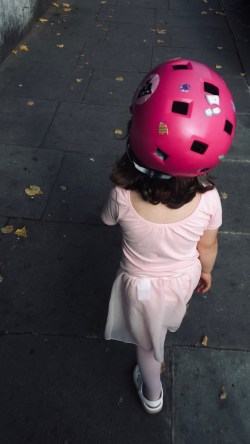
I sit on the stair case of a local church, whilst two steps down, a mother helps her young son read a storybook. Three primary school age girls run up the stairs to the church, then tiptoe inside, whispering and quietly giggling. Their mother calls them, and threatens with: ‘come down or I’ll start counting!’ On the pavement below, two boys and a girl run up the side of the church, whilst some 9 mothers mull around chatting. I check my watch, it’s nearly time, then notice the little boy is looking back at me: ‘he says his friend has the same watch as yours’, the mother says by means of an explanation. I smile: ‘it’s my son’s watch.’ I collect my things and get up to join the other mothers, who ask if my daughter is starting reception this year. Then one by one, mini ballerinas in baby pink ensembles appear at a side door, hopefully searching for their connection. As each name is called out by the assistant teacher, there’s a brief excited reunion, a reconnection. Mine appears in her new ballet outfit her grandfather bought her last week. Her old one grew too small in lockdown. A lot seems to have grown too small since lockdown. Life seems to have shrunk, become more localised and tight knit. Human-to-human classes, the congregation of locals, sprawling into the outdoors, kids allowed to play, run, be noisy, on the streets… the sheer physicality of it all. The fact that we needed to bid farewell to our children outside, rather than all cram inside (a la pre-lockdown), awkwardly and silently, glued to personalised screens, meant that we took the space to be alongside one another outside. I felt catapulted in time to an imagined moment in London’s past, with kids playing on the streets, life pulsing out in the open. It’s as if lockdown has sharpened an appetite for human connections, for the local and neighbourly, and for a sense of ‘normality’. Whilst so much is happening in the world, and when much switched off not long ago, the ordinary has become precious.

Below quote is a conversation between a 7 year old daughter and her mother, from Diana Evans’ ‘Ordinary People’, a delicious novel I’m currently reading:
“‘ I’m half English, a quarter Jamaican and a quarter Nigerian.’
‘No, you’re a quarter Nigerian, a quarter English and half Jamaican.’
‘Why?’
‘Because I’m half Nigerian and half English, and Daddy’s completely Jamaican.’
‘But I want to be completely Jamaican too,’ Ria said. ‘I want to be all of them.’
‘You can’t be all of them and only one of them at the same time. You can either be just one thing or a mixture of things. Anyway, you’re British as well.’
‘So I’m four things?’”
I’m reminded at how I did something similar in dissecting my identity, and how a core weekend tutor/ facilitator at the Gestalt Centre, said: ‘you are not a quarter this and a quarter that… you are not halves and quarters. You are everything that you are. You are all Kurdish. All Arab. All Iranian. All British. You are all of you.’ I was gripped, though I didn’t comprehend the depth of her message. Still, it stayed with me, and I come back to this image of wholeness whenever I find myself fragmenting with the differences within.
Ending with another quote from Lebanese Amin Maalouf’s book ‘In the Name of Identity: Violence and the Need to Belong’:
“What makes me myself rather than anyone else is the very fact that I am poised between two countries, two or three languages, and several cultural traditions. It is precisely this that defines my identity. Would I exist more authentically if I cut off a part of myself?”
 starakin