I’ve hardly been back in London for three weeks, and am off again to Basra for a handful of days. This time, as well as a few workshops, I’ve succumbed to being involved in the short musical film ‘I am THE Hope’, which aims to promote the charity’s initiatives and send a positive message; a message of hope, if you will.
The stars of the show will be the children from the private orphanage, whom I worked with last month, as well as a few other features, which I believe I will be a part of. The film is a collaboration of many Iraqis, based in Basra and abroad, including the many dedicated volunteers.
I didn’t see how I could be involved in this project, as I was originally asked (some four years ago!) to lead a community theatre piece, which I’d assumed would be devised. I’m interested in the process of devising a piece of community art or/ and theatre that can incorporate dialogue, building of trust, developing means of expression etc. as well as, in the way I strive to work, a strong therapeutic element. A more traditional work, where a script is pre-written and music pre-composed, with minimal (if any) input from the kids themselves, wasn’t something I wanted to be a part of. So when the theatre project was ditched, in favour of the film, I offered to design and run a series of workshops for the children, to run parallel to the film. And that’s what I went to do last month.
So before I went on my first trip to Basra, the head of LLI charity, Nadwa, asked me to play the part of the pre-Islamic Sumerian Shub-ad, Queen of Ur, in the film [up until a few minutes ago, when I double checked an email, I thought I was going to play a Sumerian goddess, so am somewhat disappointed to be playing mere royalty…] . I gave Nadwa my usual spiel: ‘I’m not pursuing a straight acting career, I am focusing on community stuff..’ yada yada yada. She was understanding, and left the matter at that.
After I met the team on the ground, in Basra, I was left feeling inspired, enthused and somewhat humbled [for a queen..]. This is a short promotional film for the charity, and seeing the wonderful people involved, pooling in all their tools and abilities to create something together, my spiel felt pretentious and out-of-place.
This is community arts within a creative grass roots context.
When asked again- this time Nadwa was on full charm offensive/ emotional blackmail, as she rang me from Basra, put the team on speaker phone, and persisted with ‘Fayiz says’, that’s the exceptionally talented and resourceful director of the film, ‘we only need you for a few days, and there is no one else who can play Queen Shub-ad…’. This mixture of flattery and sincerity was too seductive. I didn’t want to resist.
So I’m off to Basra to be a goddess… erm, a queen!

Sumerian headdress worn by Queen Shub-ad, discovered in Ur by Mr C. Leonard Woolley and published in the ‘Illustrated London News’, 1928.
Queen Shub-Ad, also known as Pu-Abi, “Word of my Father,” lived in Ur, an ancient Mesopotamian city, circa 2600–2500 B.C. during the Third Dynasty. What we know of her mostly comes from her tomb, which was excavated at Ur between 1926 and 1932. It contained more wealth than any of the other tombs, as well as the skeletons of five soldiers and twenty-three female servants who had been poisoned and buried to serve Pu-Abi in her next life. Symbols on her tomb identify her as both queen and priestess.
(above info) Brookyln Museum website:
http://www.brooklynmuseum.org/eascfa/dinner_party/heritage_floor/shub_ad_of_ur.php
————–
On a side note, I wrote this underground, on my way to a gig at the Jazz Cafe in Camden, to listen to Iraqi-Canadian rapper The Narcicyst, who’s originally from Basra [!!]. Hip hop is a young and strange world to me, so I was out of my element here. Though I particularly enjoyed the Syrian Arabic chanting, as part of Syrian-American rapper Omar Offendum’s song- it was quite surreal to have a flavour of the Arab Winter in the Jazz Cafe…
———————-
The Narcycist website: http://www.iraqisthebomb.com/
Omar Offendum’s myspace site: http://www.myspace.com/offendum
I didn’t intend to write about this, and my intention isn’t to review, but to share the extension of my boundaries post. I wrote the post, and had this later the same day, so it feels poignant to share.
I went to see one of the Playback South theatre company’s performances last night. My Gestalt therapy tutor suggested it last week, after I asked her for Gestalt-related community theatre references.
The regular evenings are held at The Candid Cafe in Islington, and the space is unique, intimate and friggin cold!
The format is seemingly simple: four performers, and a heavily pregnant performer who was playing host, and two musicians on keyboard and a motley set of instruments.
The company warm the audience with a practical demonstration of how it all works: one person says their name, recounts a brief story, thought, dream etc. and the ensemble enact/ re-enact it, hence ‘playing it back’ to the original storyteller.
I resisted my impulse to share my ‘boundaries’ issue as I worried it might be too heavy, too close and even though I trained as an actor I detest speaking in public. I become aware of my English accent; what I perceive to be a generically English RP with an equally generic foreign tinge.
I did want to experience the process from the inside, as an active participant, so when there was a resistant gap of voluntary hands, I put mine up.
I was invited to join the host, sit beside her to recount my story- apparently there isn’t usually a ‘host’ but I found her role very helpful as a mediator between ensemble and audience- so I was as brief as I could be (not sure why I felt the need to be because the atmosphere was easy and relaxed).
‘My name is Tara, and four months ago I began Gestalt therapy training. It’s all been such a fascinating experience.. very positive. Though after an intensive residency and a personal one-to-one session, I came to a realisation about myself, which has left me thoughtful, unsettled and feeling quite vulnerable.. my unaware need to test boundaries…I’m not a confrontational person, so it’s been a surprise..’
I was asked to elaborate on the boundaries.
‘..nothing exciting..for example, feeling compulsion to test time allowances in therapy, going over the word limit in an essay..’
Now I’m oddly glad I didn’t think to go into my resistance towards marriage and other cultural conventions..!
Then an image came into my mind and I ran with it:
‘Feels like discovering I’ve a third arm I was never aware of..’
The host thanked me and we both sat back as the ensemble took a breath to begin.
It was fascinating. In my mind, I didn’t feel they were re-enacting or playing back, as it’s practically impossible to do that; they were enacting what they have taken from my story in that moment. This distance helped me enjoy the performance for what it was.
My unsettled and confused thoughts, manifested into a physical chorus of sounds, expressions and movement. I noticed I laughed aloud when one of the actors said, in an exaggerated dramatic way, throwing her head back: ‘…but I thought I knew myself..’. Thinking about it now, it is one of the things that rang truest for me. This is partly how finding something new can be so unsettling, as it challenges a former belief. Hadn’t thought of it before.
Then the arm metaphor came into the space, and the actors took such pleasure in the dramaticisation of discovering a third arm. I enjoyed the release as I watched the absurdity of the third arm.
Experiencing this sense of play unravelled some of the knots in my stomach. And sharing my experience, my concerns, with audiences and ensemble alike, also lightened my burden. I wasn’t alone in carrying it somehow.
If you get a chance, do go:
The sincere and intimate space, juxtaposed with a lighter sense of play, has been inspiring. It’s highlighted just how heavy and indirect pure verbal dialogue can be in therapy.
And I recommend sharing something that means something to you. Someone else’s story, about a short dream with a talking fox, has stayed with me.
Boundaries. I only began to realise what a strong theme this is in my life in the last few days, and only yesterday experienced its role in how my identity was formed (and continually reforms).
On my experiential Gestalt therapy training, I began to test the boundaries of time– sacred in creating a safe and contained space for therapy sessions- I did this both on my personal one-to-one therapy, as well as the course ‘group process’, where we undergo group therapy to test out the theory. My therapist, on my first session, allowed me to go ten minutes over, which is unheard of in this context! She was aware of the time, but did this as she was intrigued by my lack of awareness of going over the allotted time and my resistance to ‘round off to complete’ the session. I didn’t want to stop nattering- and at the stage, we hadn’t even begun to have deep meaningful dialogue- it was just me nattering on about this and that. In the group process, the tutor didn’t stand for it. She’d began to gently count down, when we had ten minutes left (10, 5, 3 minutes etc..) , which I sincerely was unaware of, so when I began to speak a few seconds before the end of the session, she stood up and said in her warm, soft voice: ‘Tara, it’s time’. In a matter of seconds, the space was cleared, and I found myself marching towards the Liverpool station. Having resisted the initial urge to cry, I walked down Bishopsgate feeling quite numb. My own marching rhythm and street soundscape around me slowly manifested itself into music, and as I began to sing aloud to it, I felt steadier and a little more alive.
The latter is my habitual tendency to project and retroflect so I wouldn’t go into it here…
The point, I somehow resisted to even see the time limitation- the set boundary- and to inadvertently and continually test it.
This again manifested itself in going over the word limit, on my first written assignment, which compelled the same tutor to comment: ‘This is an excellent piece of work, which deserves a distinction, if not for your going way over the word limit’. I knew I had gone over the word limit, so I was aware, but I felt compelled to keep it at that.
There are so many other ways in which I now realise I do this in my life. For example, I regularly push myself to sleep ridiculously late, even when I know I will need to be up early the next morning; or taken part in performances, ignoring the pain in my lower back, which I was later found was a slipped disk (this somewhat slowed my recovery process). My reluctance to see to see the doctor in the first place is a knot to untie… these are just a few examples from a wide list of things that may or may not be because of my attitude to boundaries, but this is how I am seeing it now, and it’s making a lot of sense to me.
I don’t believe I fully took in the plethora of rules that have been shoved down my throat from a very young age. I did not see I had, I have, a choice in making my own decision, up until relatively recently. I’d swallowed (introjected) so many conventions- beginning with familial moral code starter served on a bed of cultural norms- that I was not even aware of how these have assimilated themselves into my identity. Some, like religion, I inadvertently had a chance to put my beliefs to the test. I essentially vomited what I had eaten from my family and life circumstances, to sieve the semi-digested lump with current understanding, and to slowly allow little bits back in. Like a rabbit with a very sensitive stomach.
I’m being silly- humour is generally my habitual means of deflecting what is painful for me to understand- and we need to ‘introject’ (swallow whole) to a certain degree, e.g., ‘do not cross a road when a car is approaching’ or ‘you must pay for things, not shoplift them’ etc. Apart from such rules, all else, I believe, should be open to intra-personal, potentially experiential, dialogue.
Testing the boundaries, even when I don’t realise I’m doing it, has been the rhythm to a tune I am only now beginning to hear, and am working to listen to. Being aware of our own unawareness of self is hard; I see how I’ve left myself in the dark for a long time, and it takes a lot not to self-judge myself into numbness again.
I remind myself that there is no real right or wrong. Whatever I did, in Gestalt therapy terms, is part of my own ‘creative adjustment’. I may not have had the opportunity to really test my boundaries when I needed to, at a younger age, and yet my body has refused to fully accept what was enforced. ‘The body never lies’, as my therapy tutor says, she points to her head, ‘but this is an expert at deception’.
Young adults or adolescents tend to ‘rebel’ as they test the boundaries they find themselves in, be it at home or school, until they reach a place they are content to be at; their unique equilibrium, which allows them to ground in their own sense of truth. When this process is disrupted, for example, when challenging the boundary is met with severe resistance (and this need not be aggressive at all!) then the person either withdraws (physically, emotionally, mentally etc.) or swallows whole what they cannot digest, in order to survive in their environment. Think of teenagers and the many ways in which they test themselves and those around them. It is a necessary part of the journey to realising who we are.
—I just thought of the orphan kids in Basra running wild in the workshop. Perhaps they had so many rules rammed down their scrawny throats, that for the first time they had a space where it was OK to question these rules then they rebelled! In a different/ same way, maybe I’m doing the same?
The way in which we all adapt our self to our environment is immensely versatile and creative, hence its term ‘creative adjustment’. Again, there no right or wrong here, as at one time, it was born out of a genuine need for survival. The questions to ask are: how do I interact with my environment now? Are my habitual methods still helpful? Are they harmful? Does it stop me from reaching my inner potential? Am I content? And so on.
Gestalt therapy does not attempt to fit an individual into a standardised norm, as it assumes an innate ability for any individual to strike a healthy balance for themselves. Many however, adjusted to an environment or a situation in the past, which informs their character in a way that is not particularly useful to where they are in their present surroundings. So developing an awareness of how we interact with ourselves, and our environment, helps us better assess how useful and healthy what we do is for us…
I’m over thinking again, and this time off on a tangent.
‘Lose your mind to come to your senses’, as the godfather of Gestalt therapy, Fritz Perls, Provocatively said. I’m miserably failing at this.
Bracket your judgement, Tara, bracket! That’s a lil joke for the phenomenologists there.
Boundaries. Maybe I was not able to test the boundaries I found myself in, when I needed to, for whatever reason, which itself doesn’t matter right now- Gestalt is not interested in weaving interpretations, that’s the psychoanalysis’s job- what matters is the present and how I am in it. This is what I am learning now. And it can be a painfully unsettling and vulnerable place to be in.
On the other hand, I’m immensely grateful to be aware of something essential in my self. To see myself clearer in turn allows me to see my world, and inches closer to finding my own unique truth of being. If not for this process, I’d have ignorantly, at times blissfully, carried on. Most people function and survive with the minimal degree of awareness, and there is little to criticise about that. It is bloody hard to deal with STUFF. And it doesn’t stop.
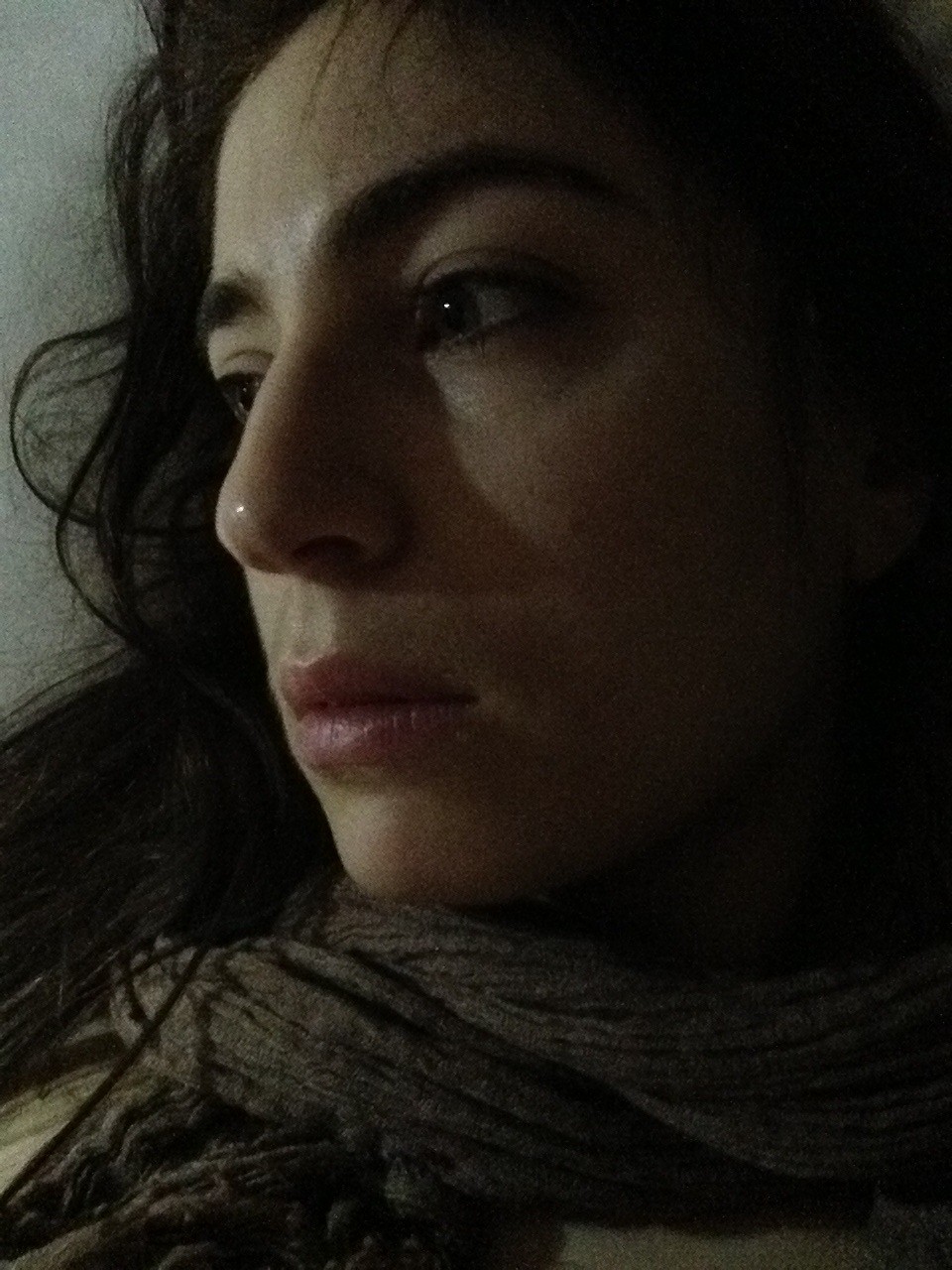
And yet, I do not simply want to survive. I want to thrive, and to see the vibrant world around me with fearless eyes.
JUST THOUGHT OF A METAPHOR:
Imagine going to the opticians for a regular check-up. Nothing is wrong per say, but the optician finds that stronger lenses might be in order. When eventually trying on the newly prescribed lenses, you feel a bit nauseous and headachy. You might even question why a new prescription was needed, as you’d learned to live contentedly as you were- ‘I just sit closer to the cinema screen’ or ‘I enlarge the font on my Kindle’- After a period of time, you settle into the new prescription, and slowly begin to realise how much clearer and brighter everything is around you.
It feels a little like that, except I’m still in the nauseous, headache-y stage right now.
I just came back from an intensive five-day Residential, with all seventy trainee therapists from my college- it is a minimum five year programme, so this was a mix of students from the different years- and I got home last night reeling, literally nauseous and headachy. I forced some dinner down, and actually, physically, threw it up. I was so full of all the STUFF that came up during the residential- my own as well as other people- that I could not take anything else in. Didn’t help that I’d not had more than a few hours of sleep per night, buzzing in my mind and body (hence sleepless pic above!).
It’s somewhat ironic that my cat Pushkin, for the first time in her seven year old life, chose to puke in various corners of the flat as a kind of welcoming pre-emptive gesture.
And yet it is so easy to slip back into normality, and yet I don’t want to just slip back into my old pair of glasses, and need to see this new adjustment through. A friend is passing by for tea in an hour; I’ve work to catch-up to and plan to see a play this evening. A little break surely is a good thing.
And just realised how I was told that blogs needed to be short and sweet, which only seems to free-up my rambling abilities…
This is an email I wrote to family and friends on Sunday 20th January 2013, when I was homeward bound from a three-day trip to Basra, Iraq, to lead interdisciplinary creative therapeutic workshops.
*******
I’m sorry I’ve not been good with keeping all updated, and even forgetting to stay in touch after my initial ‘arrived safely into Basra’ email. It’s been full on, non-stop and I chose to use my few moments alone to rest, focus and generally gather myself.
So, Basra, I’m not sure where to start or how to end, as I’m still reeling from all the deep and varied experiences. So will blab on and leave it to your discretion to skip chunks of text which may be of less interest. I’m not in a frame of mind to attempt clever writing or editing.
So, as part of Living Light International’s ‘Seeds of Hope’ initiative, I was invited to run a three-day creative-therapeutic workshop with some of the children the organisation is working with. A selected number are involved in a musical film, ‘I am the Hope’, which is the product of artistic collaboration between various Iraqis, living both in and out of Iraq. My work ran parallel to this film, but had no relation in terms of content or style, although many of those involved in the film supported the practical organisation, and on-the-day help with the workshops. I was given the utmost respect and trust from all involved, above all the head of the charity, Nadwa- a woman whose full identity is kept secret for security reasons- without which I know none of the work would have been possible.
So I solely-led six therapeutic creative (drama-voice-movement) and meditative workshops with three different groups of children: from a private orphanage, young boys and girls 7-12 years, and adolescent girls 14-19 years; and another young group of street boys and girls, from the main dump yard area of Basra (الطمر إلصحي ). The latter earn a living collecting items from the rubbish heaps, which their parents can sell to provide the family with an income. They live in make-shift houses or tents, and only a few have been to school- rarely after the age of 12 years and girls are never allowed to go to school- and most have never been out of the dump yard areas.
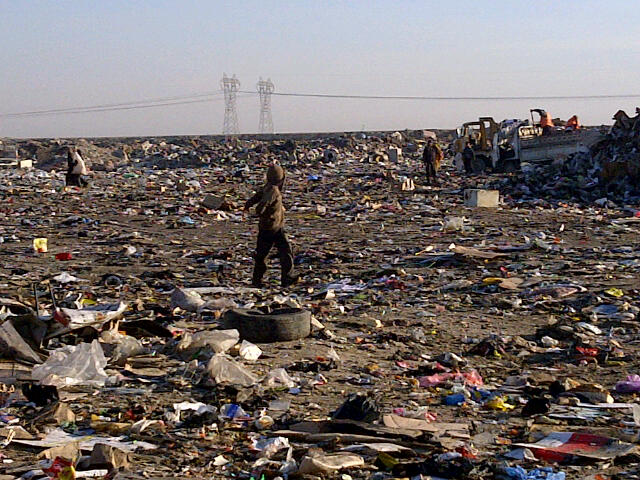
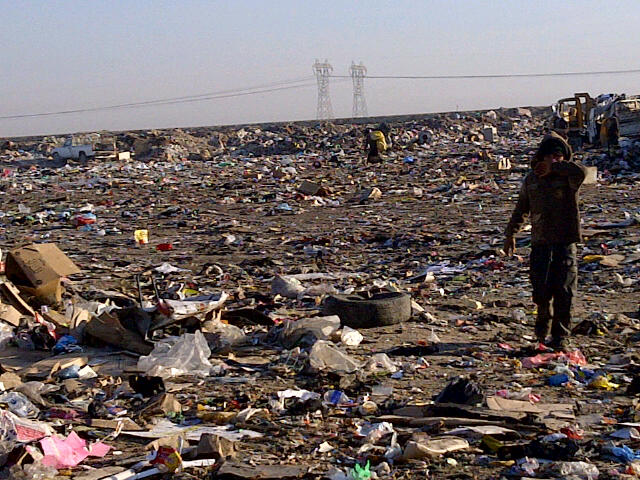
Logistically we couldn’t fit in more than two workshops a day, always beginning with the dump yard kids, as they tend to be in bed by six in the evening to be up before dawn to work, and we alternated between the younger and older orphan groups. I chose to focus on the older girls, because the younger ones were particularly wild and almost impossible to manage on my own, in the provided space, which was an open-plan hall at the Sheraton Hotel. I insisted the workshop stay closed; for example, Nadwa, the volunteers, hotel staff and a camera crew, who are in the process of documenting the making of the musical film, were all asked to keep out of the workshop space. This was important to help implement an entirely different environment for the children, to avoid unnecessary distractions and for the older girls in particular, a sense of privacy and secure within a contained space (this is my psychotherapy training talking!).
I had designed workshops incorporating a mishmash of my own experience, what I felt might work best for the children, based on Nadwa’s briefing- Nadwa and I been in correspondence for five years prior to this trip!- I’d sought the advice of a young director colleague and friend, Josh Azouz, from the Muslim-Jewish theatre company, MUJU, whom I work with. We talked through the design, and I was glad to get his support and feedback. I also received support from my one-to-one therapist, who I see weekly as part of my Gestalt Psychotherapy training course, and I found this particularly helpful too.
I chose to implement a combination of movement, drama and voice exercises and games, Sufi meditation, and used a predominantly psychotherapy structure to contain it all. For example, the group always began by forming a circle, to ‘check-in’ on what they are feeling, establish ground rules for the group, to share what might be planned for that particular session, offer space for questions etc. Then another circle at the end of the workshop to ‘check-out’, as well as opportunities to give brief feedback after every game or exercise through the workshop. It was interesting to see how the idea of sharing their immediate thoughts seemed odd to them at first; they simply didn’t understand and tried to give me whatever they felt might be a correct answer of sorts. Towards the end, for many, this seemed to become automatic. They wanted to share their own experiences of the game or exercise, what they liked, what they didn’t- although it was hard to convince them to share more ‘negative’ feedback with me, not just positive, even when I explained this would help me to better plan for the next session, they seemed to regard it as disrespectful- so we talked, played, talked some more, exercised, danced, sang, and had a little chat towards the end again.
I had instances, when leading an exercise or a game, of remembering where I’d learned these from, as this varied from drama school in London, at the Shakespeare Globe, Moscow, Paris, the many workshops I’ve attended, the Gestalt therapy training course, and my refuge of Sufi meditation with Adnan Sarhan…it felt so wonderful to be in a position to share these privileges. With these children, these instances felt like deep and active connections between the past, present and future.
The الطمر إلصحي kids have no conception of ‘london’ or even ‘dollar’ or ‘English’ as another language. Their life is incredibly simple, and yet, I found that there was so much to admire in their environment: it had all the richness of being in the Bedouin Arab tribal culture, which resembled a form of sensitivity and elegance, poised with a truly deep sense of pride, generosity and dignity. These children were able to embody elements of their culture through their childlike being. They had exceptional freedom of movement, were so quick to react to impulses in games and yet they had an ability to immediately switch into their outer awareness to sense what is needed from them in a given moment. For example, they might be dancing wildly in a game of musical chairs, and when I’d clap, to establish a quick assembly into a circle, they would all immediately gather, maintaining their vibrant energy and sparkle in the eye. They learned early on, when someone chats or whispers, I will not speak until they have finished, so they will establish silence amongst themselves to allow the session to continue.


I compare these observations not merely with the children I work with in London, who range from global immigrants into the UK to privileged private school children, but with the younger orphan kids, whose younger group were of the same age as the ‘dump yard’ kids. Those were also incredibly warm, affectionate and tactile. Yet, I see their energy similar to that of a sling-shot, where the elastic has been stretched back only to be unleashed forward with all its might. Their majority raided the space, literally, climbing on furniture, flooding toilets, playing with my musical instruments and i-Pod etc. Initially I attempted to discipline, just to continue with my workshop plan, but found I can only do this in a ‘teacher/ parent’ ترزيله manner, which I felt goes against the premise of the work itself.
This only occurred in one workshop, which I initially thought was a disaster, although now I realise it has provided a valuable insight into the children’s lives and a learning experience for me.
When designing the workshop, I’d decided to mainly have games and ‘releasing’ activities, for the orphans, to provide a temporary refuge from their school and boarding regime. I based this on my own experience and dislike of the generically applied rule-bound boarding school life, which I attended from the ages of 11 to 15 years, when I first arrived into England. I now believe I underestimated their need to break away. With two exceptions, I managed to gather them again, simply by abandoning all pre-planned games and activities, to play whatever game came to mind in that moment. I ran and they all enthusiastically chased me, and upon request, I sang to them- at times this felt as if I was in a Disney cartoon quelling wild children with song!- then we did the Moscow-style exercises but we lingered and messed about with most of them (turning the odd positions into comic characters or adding sounds to the movements). If there was the slightest whiff of a programme, then they’d want to break away again. It would be interesting to see how I might be able to contain them, or to at least work with this energy in a more constructive way, or maybe there isn’t an immediate need as they are receiving what they need from their own journey. I don’t know.
I know that particular group enjoyed their one-off wild session, as I worked with the older orphan girls the next day, and they said: ‘the younger ones raved on about the fun they had, especially chasing you around the room! ‘, and ‘they kept trying to do crazy exercises with their arms and legs..!’
These older girls, who sealed my final workshop yesterday afternoon, were quite different. They were polite, friendly and respectful when I first met them in the orphanage. on my first day in Basra- already shattered from travel- and expressed an interest in participating in the workshops. I work with adolescents in London, so I was equally keen to work with a more familiar age group.
We invited them to take a workshop later that afternoon. I insisted they wear loose comfortable clothing, as they’d made a special effort to put on their nicest clothes to meet Nadwa and me; of course they all wore headscarves and clarified they cannot wear tracksuit bottoms without more modest layering to cover the shape of their bodies etc. They had begun learning the words to the song for ‘I am the Hope’, the musical film, and sang a bit to me when I met them. Two had lovely singing voices, and a few others sang on request, from Nadwa and their headmistress. They seemed proud and eager to share their gift of voice and skill with us, which I found potentially encouraging. One young girl, no more than 6 years, was eating from a packet of crisps when she was asked to sing, and croaked a song with visible pieces of half-chewed crisps in her mouth. I couldn’t tell if it was anxiety or excitement that inspired her to meet the demands of her teacher with such unquestioning action.
So when we first worked together, initially in a hotel with a smaller space, I left out most of the games, and focused on check-ins, short warm-ups, a drama ‘imitation’ game, followed by free-form dance meditation, a listening relaxation/ meditation exercise to music (كلثوم أم الليل أقبل), then checking-out. I noted before the relaxation exercise, all the girls decided to take their head-scarves off- along with the added puffy hair clips worn under the veil to give the impression of thicker hair undernearth- and at the end of the relaxation exercise, a few of the girls slept, which I saw as a sign of having entrusted the safety of the space and those in it. They danced and giggled a lot, and were generally somewhat unfocused with the detail of drama exercises. This didn’t worry me, as I could see, and later confirmed, these were all new experiences. Comments at the end included: ‘I don’t know what we did, but I feel much better now than I did before we began’, and ‘I enjoyed myself. Doesn’t feel like we did anything in particular, but I enjoyed myself and I feel good and glad for it’.
Their second, and my last, session had not been planned until that day. The girls had an exam the following day, so it was all a bit tight in timing. I had less than half an hour between the ‘dump yard’ kids leaving and the girls arriving, and had to help prepare the space. This time, the area was bigger in size, and I gave them a choice between calmer or more hyper games. They almost exclusively chose the latter. We checked-in, did a warm-up, and then played three games consecutively.
We gathered for a check-out, sadly having run out of time for a relaxation exercise, and these are a few comments they chose to share:
‘I didn’t want to come to this, when I have an exam tomorrow at 8:30am, but I am so glad I did come. I totally forgot the exam and feel so at ease now, and in a strange way, more ready for the exam’; ‘again, I don’t know what we did exactly, and I don’t care as I know I feel good now, like I escaped myself for this last hour and a half’, ‘I was sick of home, sick of myself, and now, I just feel more awake. Happy and at peace’.

After the session ended, still in a circle and waiting for our food to arrive, the girls wanted to play ‘spin the bottle’- spinning a water bottle in the middle of a circle, so the bottle spout points towards an individual who then asks a question of another person to reply- when it was my turn to ask, I asked the quietest girl out of the group, ‘what is your biggest ambition or dream? It needn’t be practical in any way’. She sat quietly for a bit, and then said:
‘I want to be free and independent. Be able to go in and out as I please, not bound by anyone, any gossip or any rules. They say, get your education (ةشهاد) and you can do anything. It’s not true. Society will never let me be free. I want to travel abroad on my own. I will never be able to do that.’
Later in the game, I was asked why if I’d experienced love, I said I’m 33 years old, surely I’d be quite odd if I hadn’t! They asked why I’m not married; I said it was hard to find someone who strikes a balance between what I am and what I want to be. I was surprised they unanimously felt marriage was confining and ‘a step backwards’, and advised me to stay as I am and ‘continue to be free’, and most added, that given the choice, they would rather be free and independent than married.
When I was asked if Basra has changed, from when I was last there, I explained that it was my first time in Basra, that I originally come from Baghdad. I explained that I left when I was 11 years old, so my impressions will not be as mature as theirs at their age. I did say, from what I can gather, women seemed a lot less hidden, and they had a lot more power in their lives from what I remembered. I said that growing up I hardly saw headscarved women in the city. I’d read of Basra’s diverse religious heritage, as Iraq’s main port, with its once large Jewish, Christian and Armenian communities, and I wondered how much of that history they were privy to. I generally resisted commenting or volunteering personal information, unless I was particularly asked a question.
I noticed both groups from the orphanage showed a strong need for individual attention, which was more of a rarity with the dump yard children. With a few shy exceptions, the latter were happy to take centre stage and then to mesh back into their group. I wonder if it’s because they live with their families, within a close-knit tribal setting, for better or worse, rather than a school-like environment with only staff to cater for the many orphans there. I felt the street kids were seen as being the worse off, by our Seeds of Hope team, as they lack academic schooling and an acceptable/ modern standard of health and safety. Although I agree with the latter needs, I believe what they have, and what the children from the orphanage lack, is familial love and the rootedness of a ‘home’. We focused on the children, but I wonder now if there is a way of incorporating the parents in any future schemes, as I fear a detachment from the children’s family will render them rootless and decontexualised. I will have to look up other schemes, to see if longer-term studies have considered this issue.
*******
I was interviewed by a local channel and of course I said all the wrong things in Arabic. It’s partly my lack of practise, and never having spoken about my work in Arabic before (!). For example, I said ‘I work in the socialist arts’, instead of ‘community arts’. On another note, I found that translating directly from the English did not always work, for example, ‘to be aware’, came out as ‘pay attention’, which is somewhat different:دير بالك as realistically, it isn’t simply about finding the ‘correct term’ in Arabic, to use in the interview, but to be able to relate the meaning of the concept to the children. For the interview, which I was exhausted when interviewed, I also said:شط البحر ‘Gulf Sea’, instead of ‘Arab Gulf’ three times! In fairness, I was exhausted on the final day, when they chose to conduct the interview.
I also noticed a lot of my vocabulary had become petrified, as the language continued to develop in Iraq whilst my diaspora was oblivious to these changes. A lot of the Turkish and Iranian influenced words seem to have been weeded out. I used words that were either entirely unfamiliar to the children, or amusing to the adults.
The conspicuous Islamic, in particular Shi’i, religious slogans were everywhere. It felt eerie. I never heard any music other than religious chanting, even at the Sheraton (or did I imagine that?). Personally, I considered wearing a headscarf, but after trying one on at Istanbul airport, it did not feel right for me to wear it. I decided to wear it only if I was strongly advised to, if my bare head posed danger to the team or myself, and was ready to take my queue from my experienced host, Nadwa. Nadwa must be in her late sixties, though she appears no older than mid-forties, wears loose and ‘modest’ clothing, does not wear the headscarf, and always aims to strike a balance between respect and humour in her conduct. She is defiant in her light and humorous manner, happy to play the role of dumb stranger to get what she needs from officials, shop keepers, drivers etc. on a daily basis. She is incredibly fair skinned, with short blonde hair and bright green eyes, so she does stick out, even in her black robe/ jalabiyya, until she opens her mouth to reveal her native Baghdadi-Iraqi. To me, she is truly an inspiration. I believe we both appeared to be non-Arab foreigners, which may be one reason why people initially let us be, and the nature of our work was generally the second reason. Saying I am Iraqi was almost always met by surprise- ‘both parents? really?!’- and with all I met, I only received praise and touching appreciation for the work.
I met a wonderfully crazy bunch of young peeps that go out to clean different areas of Basra every Friday. It has become a network, and they meet often and have wonderful self-defined ‘flower power’ ambitions to change Basra for the better; to open its society and bring back some of its former glory. The group view one another as family members, and insist that cleaning Basra is a mere symbol of what they hope to achieve in themselves and the wider society as a whole. ‘We don’t talk so much, we’re sick of talk. We act. We clean, and show our beliefs in practise’, said one of the co-founders, Khalid. The girls in the group are as active, vocal and boisterous in the group, especially as we were all gathered to watch the Iraq-Emirates football game on telly- ‘Our societal rules make no sense; why can’t I sit and talk in public with one of my female friends? The more they segregate us, the more they reveal of their own perversions, not ours’. Some of the girls in the group said they do not consider themselves veiled, as they only wear a scarf on their head for fear of being beaten if seen bare-headed in public. They cannot go out late, and this sometimes applied to the younger men too. As they clean, the group actively involves passer-by’s, especially children, and are only too keen to incorporate more interested parties to expand and grow. They view this movement in a longer-term capacity, estimating a minimum of twenty five years, to reap full benefits. Their litter cleaning seems an exterior symbol of their inner personal and spiritual cleansing. Their facebook page can be found at: https://www.facebook.com/basracleaner
On the last night, after the disastrous interview, we all just sat and chatted.
This was a chance to meet some of the creative, innovative and outside-the-box minds in Basra.
It made me aware that THIS is where art and theatre can make a truly brave and worthy statement, be this political, social or/ and personal. What’s the use of putting on a play on Iraqi women in London, other than to inform a ‘Western’ audience? It is here that people are using their creativity, their everyday existence to be the change they hope to see in the world (to borrow Ghandi’s words). I feel inspired to have met those who creatively challenge their social and political environment, who work within its narrow constraints with an ever-expanding mind-set. A tinge of sadness touches me, as the Basrawi society seems cornered off from the wider world, and yet these were not the fatalist Iraqis I’d grown accustomed to in London and abroad. These are living the reality, and actively working with it for a greater future.
Also, on several occasions, I was told of how bored everybody was of the themes of war and repression within the arts. ‘If this is our reality, then we’d like to escape it, not have it reflected back at us like an intrusive mirror, thank you very much!’, a young fashion designer, Ziyad, told me as we drove to pick up the girls from the orphanage. ‘For my last show, I was asked why I chose the theme of modernising ancient-Iraqi costume designs, “what does this have to do with our present reality?”, very little, I told them, and that’s the whole point!’. On the Istanbul-Basra plane ride, I met a man from Nasiriye, who told me how he had enjoyed a site-specific immersive performance led by an Italian actress and two Italy-based Iraqi actors. He was very impressed with the woman’s ability to mourn and grieve, ‘just like a normal Iraqi woman might!’, and how wonderful it was that such events were taking place in Basra. When I asked about this performance, those based in Basra, again Ziyad, said that he’d not appreciated those coming from outside to embody his supposed plight. ‘Yes, we have a lot to grieve about, yes, but why not come from Italy to show us something different? I hoped they’d perform some traditional Italian theatre for us. That would have been truly special’. Prior to this, I’m sure I’d have been surprised if I heard an Italian company is taking a typical Commedia dell’Arte troupe, to perform comedy sketches in Basra, which have nothing to do with themes of identity, war, repression etc. Whereas now, I feel that perhaps like the orphan kids who wanted to be unleashed from their rule-bound reality, many in Basra might long for a similar refuge in the arts.
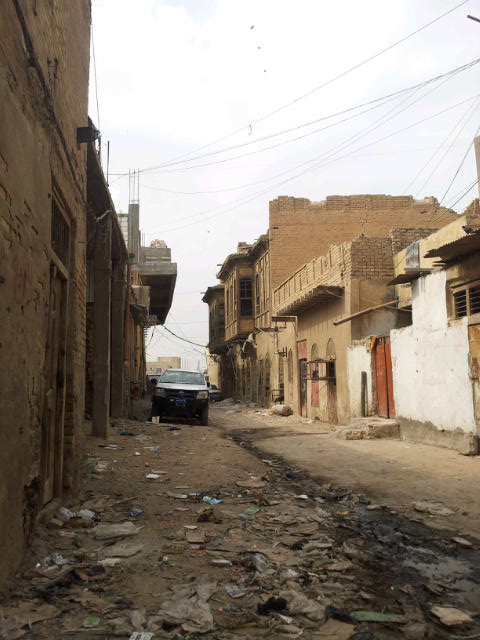
My time was so fleeting that I wasn’t able to accept any of the invites of mini-tours around Basra, to see the traditional shanasheel houses, have a boat ride, eat masgouf, or even sit down to have one proper meal. It was such a mad rush, we were lucky to get a hot sarnie on-the-go. And poor Nadwar is a vegetarian, so she would be over the moon if we made it to a falafel place, so she’d have more than a salad wrap!

*******
There is so much more and I’ve yet to transcribe my notes to write the report. I wanted to send this now before it all settles down to make more sense.
Finally I’m off on Turkish Airlines now, as there were delays in Istanbul because of the snow in London, and the adventure hasn’t stopped yet. I heard an announcement in English, asking if there are any doctors on board. I ignored the announcement, until a stewardess asked me, in Turkish, if I speak Arabic. I was then led towards a woman and her crying child, made an announcement in Arabic for a doc, was led back to the woman to give advice(!). Quite ironic as I was referred to as ‘doctor Tara’ in Basra, even when I tried to explain that I am not a doctor, so I got used to the title. Maybe this was payback! The girl had a stomach upset, and the mother was crying with worry, so I calmed the mother and the child quietened too. Simple. Turned out the two year old’s nappy had to be changed. Medical shmedical!
Love to all and God bless xx x
 starakin